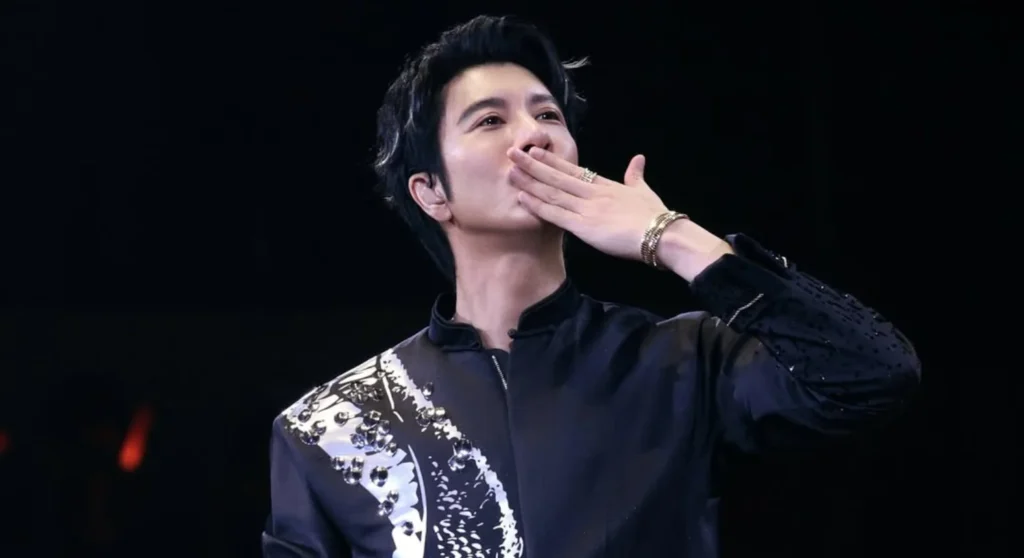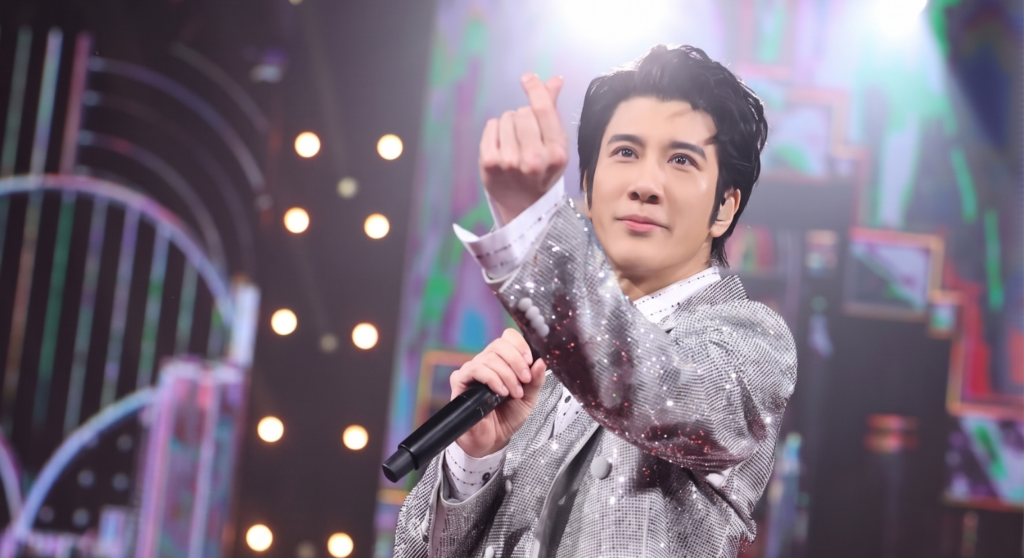


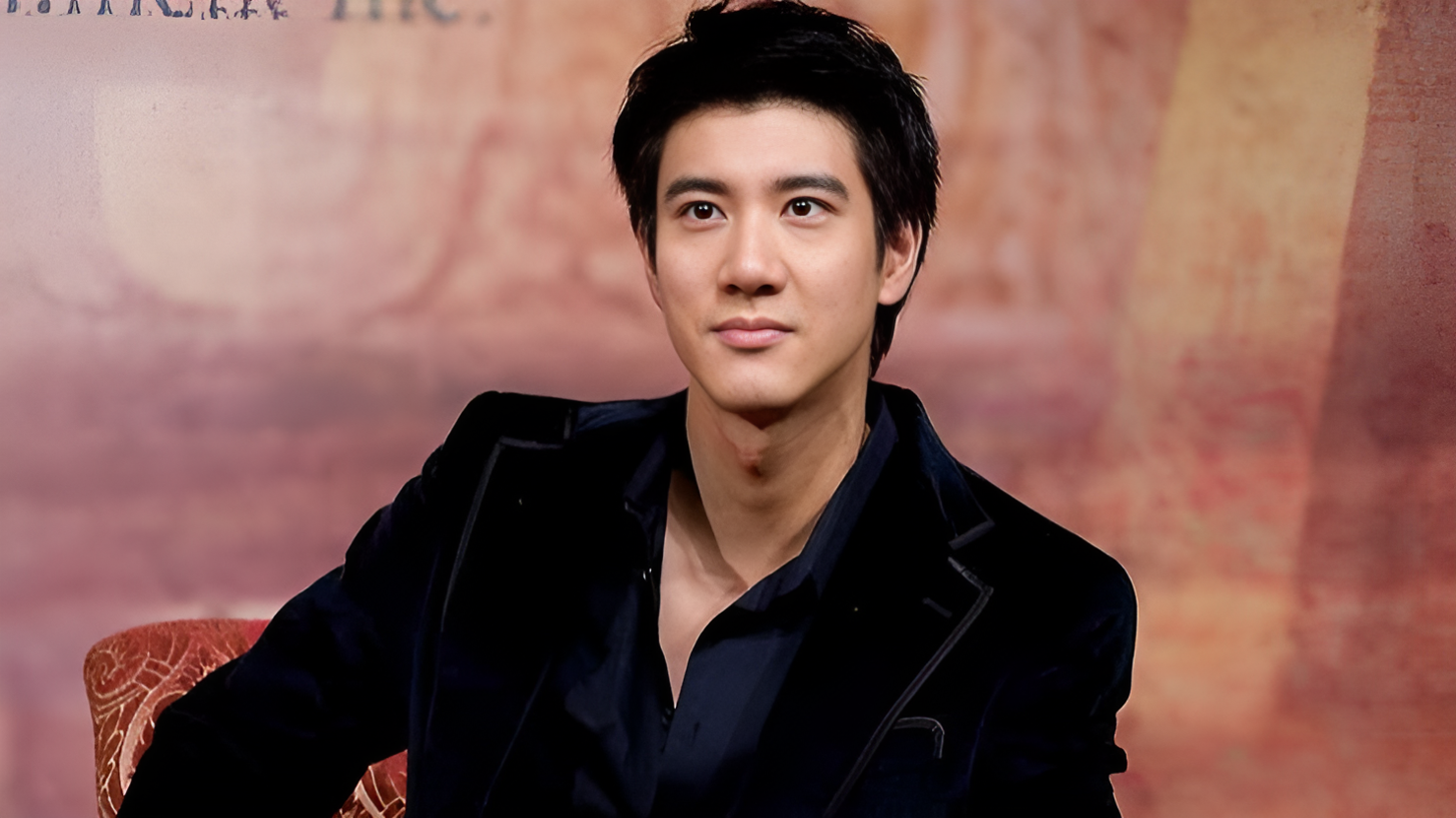
Wang Leehom is one of those rare artists whose influence on a music genre goes deeper than chart success. As a classically trained musician who chose to make Mandopop rather than pursue Western classical performance, and as the artist who coined the term ‘chinked-out’ for his genre-defining fusion style, he brought a level of musical ambition to C-pop that still shapes the genre in 2026.
This guide covers his most iconic songs — with full context, cultural significance, and musical analysis — plus everything you need to understand his unique style and why it mattered.
Table of Contents
Quick Answer:
Wang Leehom (王力宏) is one of Mandopop’s most musically ambitious artists — a classically trained multi-instrumentalist who pioneered ‘chinked-out’, a fusion of Chinese folk music, Beijing Opera, and Western R&B and hip-hop. His most celebrated songs include Forever Love (永远的第一天), Wei Yi (唯一), Heroes of Earth (盖世英雄), Change Me (改变自己), and his iconic cover of The Descendants of the Dragon (龙的传人). This guide covers his best songs, his music style, and his lasting influence on C-pop.
Who Is Wang Leehom?
Wang Leehom (王力宏, born May 17, 1976 in Rochester, New York) is a Taiwanese-American singer, songwriter, musician, producer, actor, and director. He is one of the most musically versatile figures in Mandopop — classically trained in violin and piano, proficient in over a dozen instruments, and the pioneer of ‘chinked-out’: a fusion of Chinese traditional music and Western R&B and hip-hop that he introduced to mainstream Mandarin pop in the late 1990s and 2000s.
Born into a family with Taiwanese roots and raised in the United States, Wang Leehom studied at Williams College and the Berklee College of Music before launching his music career in the mid-1990s. His classical training — unusual for a pop artist — gave him a musical depth that set him apart from his peers and allowed him to compose, arrange, and produce at a level rarely seen in the genre.
At the peak of his commercial success in the 2000s, he was one of the best-selling Mandarin-language artists in the world, regularly selling out arenas across Asia and releasing albums that charted across Taiwan, Mainland China, Hong Kong, and Southeast Asia.
What Is Wang Leehom’s Music Style?
What Is ‘Chinked-Out’?
‘Chinked-out’ is a term coined by Wang Leehom to describe his signature musical fusion: the blending of traditional Chinese musical elements — folk melodies, classical instruments like the erhu and guzheng, structural influences from Beijing Opera — with Western R&B, hip-hop, and modern pop production. Wang Leehom introduced this style in the late 1990s and fully developed it through the 2000s, creating a sound that was simultaneously globally modern and specifically, distinctly Chinese.
The significance of chinked-out goes beyond aesthetics. Before Wang Leehom, mainstream Mandopop was largely divided between Western-influenced pop (which sounded like an Asian version of American or British pop) and traditional Chinese music (which was largely separate from the pop mainstream). Chinked-out proposed a third path: music that was fully contemporary in production values while being deeply rooted in Chinese cultural heritage.
This philosophy directly anticipates what is now called Zhongguo Feng (‘Chinese style’) — the fast-growing subgenre that is one of the defining trends in C-pop in 2025–2026. Wang Leehom was doing this two decades before it became a trend.
| Element | In Wang Leehom’s Chinked-Out Style |
| Chinese Instruments | Erhu, guzheng, pipa, dizi — woven into arrangements alongside electric guitar, drums, and synthesisers |
| Vocal Tradition | Influences from Beijing Opera and Chinese folk singing techniques — power and ornamentation drawn from Chinese rather than Western vocal traditions |
| Lyrical Approach | References to Chinese history, mythology, and cultural identity — far more literary than typical pop conventions |
| Production Framework | Western R&B and hip-hop beats and production aesthetics — the sonic context is contemporary global pop |
| Philosophy | Cultural pride without nostalgia — the message is that Chinese heritage is not incompatible with modern musical ambition |
What Instruments Does Wang Leehom Play?
Wang Leehom is one of the most multi-instrumental artists in Mandopop. His ability to play across both Western and Chinese instrument traditions is central to his musical identity and the chinked-out style he created.
| Instrument | Training Level | Significance in His Music |
| Violin | Classical (primary instrument — studied from childhood) | His first instrument and his most technically demanding — classical violin training gave him the musical theory foundation for everything that followed |
| Piano | Classical (extensive formal training) | Used in composition, ballad accompaniment, and as the harmonic foundation for most of his slower work |
| Guitar (acoustic + electric) | Professional level | His most-used instrument in live performance; central to his R&B and rock-influenced tracks |
| Erhu (二胡) | Proficient | Traditional Chinese two-stringed fiddle — appears in chinked-out tracks to create the Chinese instrumental signature |
| Guzheng (古筝) | Proficient | Traditional Chinese plucked zither — used in arrangements for atmospheric Chinese texture |
| Trumpet | Trained | His jazz-influenced tracks use trumpet as a melodic counterpoint — an unusual instrument choice for Mandopop |
| Drums / Percussion | Competent | Wang Leehom performs percussion in live settings and understands rhythm deeply as a composer |
Discover: Wang Leehom’s Musical Instruments: Exploring the Tools Behind His Iconic Sound
Wang Leehom’s Most Iconic Songs: Quick Reference
A scannable overview of his most celebrated and culturally significant tracks:
| Song (English) | Chinese Title | Album | Year | Style | Why It Matters |
| Forever Love | 永远的第一天 | Forever’s First Day | 1999 | Mandopop ballad | Became a defining Chinese wedding anthem; first major hit that established his emotional ballad identity |
| Wei Yi (The Only One) | 唯一 | Wei Yi | 2001 | Acoustic love ballad | One of the best-selling Mandarin singles of the 2000s; still a karaoke and streaming staple 25 years on |
| Heroes of Earth | 盖世英雄 | Heroes of Earth | 2005 | Chinked-out / Beijing Opera fusion | His most genre-defining track — fuses rap verses with Beijing Opera vocals; a landmark in Mandopop innovation |
| Change Me | 改变自己 | Heart Beat | 2008 | R&B / social message pop | An introspective appeal for personal and environmental responsibility — one of few Mandopop tracks with an explicit ecological message |
| Descendants of the Dragon | 龙的传人 | Hua Zhan (various) | Multiple versions | Cultural anthem — rock/hip-hop reimagining | His electrifying cover of Hou Dejian’s classic; transformed it from folk anthem into a contemporary statement of Chinese cultural identity |
| Heartbeat | 心跳 | Heartbeat | 2000 | R&B / Mandopop | Early career track that established his R&B credentials alongside his ballad identity |
| Love the Way You Are | 你是我心内的一首歌 | If You | 1997 | Debut-era Mandopop | His breakthrough track — the song that introduced his voice to the Mandopop mainstream |
| Kiss Goodbye | Kiss Goodbye | Shangri-La | 2004 | English-Mandarin crossover pop | One of the rare tracks where he sings partly in English — shows his ambition for Western crossover |
| Xin Zhong De Ri Yue | 心中的日月 | Shangri-La | 2004 | Chinked-out / Tibetan influence | Incorporates Tibetan musical elements — demonstrates the geographic reach of his cultural fusion approach |
| Zai Mei You Bie De Li You | 再没有别的理由 | Not Yet | 2014 | Mature Mandopop ballad | From his later commercial peak — emotionally refined, vocally authoritative |
New to Wang Leehom? Start with Wei Yi for the ballad tradition, Heroes of Earth for the chinked-out innovation, and Change Me for his socially conscious side. These three songs cover the range of who he is as an artist.
Deep Dives: The Songs That Define Wang Leehom
1 Forever Love (永远的第一天) | Forever’s First Day (1999)
Genre: Mandopop ballad — piano-led, orchestral strings
Forever Love is the song that established Wang Leehom as a serious romantic balladeer. Released as the title track and theme song for the film ‘Forever’s First Day’ (1999), it immediately distinguished itself from the lighter pop fare of the late 1990s with its orchestral arrangement, lyrical sincerity, and vocal restraint. Wang Leehom doesn’t oversing it — the emotion comes from precision and authenticity rather than scale, a quality that set him apart from contemporaries.
The song has since become one of the most played Chinese wedding songs of the past 25 years — a cultural durability that speaks to its emotional universality. For new listeners, it remains the ideal introduction to Wang Leehom’s ballad sensibility: warm, technically controlled, and genuinely moving without being melodramatic.
🎵 Stream on Spotify: Search ‘Wang Leehom Forever Love’ — available on all major platforms.
2 Wei Yi — The Only One (唯一) | Wei Yi (2001)
Genre: Acoustic love ballad — minimal instrumentation, vocal-centred
Wei Yi (唯一, meaning ‘the only one’ or ‘uniquely you’) is arguably Wang Leehom’s most beloved song — the one that sold the most copies, generated the most lasting radio play, and is still among his most-streamed tracks on Spotify over two decades after its release. Its defining quality is restraint: where many Mandopop ballads build to dramatic crescendos, Wei Yi trusts in simplicity — a gentle acoustic guitar foundation, Wang Leehom’s voice, and lyrics of exceptional directness about singular love.
The song’s longevity is testament to a truth about Mandopop: the genre’s most durable hits are often its most emotionally honest ones. Wei Yi has been covered by dozens of Chinese artists, used in dozens of film and drama soundtracks, and remains a karaoke standard across all Chinese-speaking markets. For an artist known for innovation, it is a supremely simple song — and that simplicity is exactly its strength.
🎵 Stream on Spotify: Search ‘Wang Leehom Wei Yi 唯一‘ — high streaming numbers on all platforms.
3 Heroes of Earth (盖世英雄) | Heroes of Earth (2005)
Genre: Chinked-out flagship — Beijing Opera + hip-hop fusion
Heroes of Earth (盖世英雄) is the single most representative example of Wang Leehom’s chinked-out philosophy. It opens with Beijing Opera vocals — complete with the operatic ornamentation and power that comes from a centuries-old Chinese performance tradition — then drops into a hip-hop beat and rap verses that feel genuinely contemporary. The contrast is not jarring; it is the point. Wang Leehom is arguing, through the music itself, that these two traditions belong together.
The lyrics celebrate the martial arts heroes of Chinese history and legend, creating a song that is simultaneously a cultural statement, a musical experiment, and a wildly listenable pop track. It was commercially successful and critically influential — other Mandopop artists began experimenting with cultural fusion in direct response to this song’s impact. In the context of 2025–2026’s Zhongguo Feng revival, Heroes of Earth sounds remarkably prescient.
🎵 Stream on Spotify: Search ‘Wang Leehom Heroes of Earth 盖世英雄’.
4 Change Me (改变自己) | Heart Beat (2008)
Genre: R&B / socially conscious Mandopop
Change Me (改变自己) stands apart in Wang Leehom’s discography for its thematic ambition. Most Mandopop — even at its most sophisticated — deals in personal emotional territory: love, longing, identity, memory. Change Me turns the lens outward: it is an appeal for environmental consciousness and personal accountability, a pop song that asks listeners to examine their impact on the world. In the context of 2008, when ecological awareness was just beginning to enter mainstream pop culture globally, this was a genuinely unusual creative choice for a Mandarin pop artist.
The song’s production is anchored in R&B — smooth, warm, and radio-friendly — which ensures its message reaches a broad audience without didacticism. Wang Leehom followed the release with personal ecological commitments: eco-friendly album packaging and green concert practices. The song holds up in 2026 because its themes have only grown more relevant, and because the music is strong enough to stand independently of its message.
🎵 Stream on Spotify: Search ‘Wang Leehom Change Me 改变自己’.
5 The Descendants of the Dragon (龙的传人) | Various (multiple versions across his career) (Multiple releases)
Genre: Cultural anthem — rock, hip-hop, and folk fusion cover
The Descendants of the Dragon (龙的传人) was originally written by Taiwanese singer-songwriter Hou Dejian in 1978 as an expression of Chinese cultural identity. By the time Wang Leehom reimagined it, the song had already been covered by dozens of artists and had achieved the status of a quasi-anthem for Chinese communities worldwide. Wang Leehom’s achievement was to take this culturally loaded material and make it feel contemporary — not nostalgic.
His version incorporates rock production, hip-hop rhythmic elements, and his characteristic chinked-out Chinese instrumental textures, while the vocal performance brings a passion and urgency that connects the song’s historical weight to present-day cultural pride. It is an act of cultural curation as much as artistic interpretation — Wang Leehom is saying that Chinese identity is not a historical artefact but a living, evolving force that belongs in contemporary music. Among his covers, this remains his most significant cultural statement.
🎵 Stream on YouTube: Search ‘Wang Leehom Descendants of the Dragon 龙的传人’.
More Essential Wang Leehom Songs
| Song | Album | Year | Why It’s Essential |
| Heartbeat (心跳) | Heartbeat | 2000 | His R&B showcase — demonstrates that his facility with Black American music traditions was genuine, not superficial |
| Kiss Goodbye | Shangri-La | 2004 | English-Mandarin hybrid track that demonstrated his crossover ambitions and showed Western listeners a different dimension of his artistry |
| Xin Zhong De Ri Yue (心中的日月) | Shangri-La | 2004 | Incorporates Tibetan musical influences — the geographic scope of his cultural fusion approach in one song |
| Terracotta Warrior (兵马俑) | Heroes of Earth | 2005 | Another chinked-out landmark — this time drawing on Han dynasty imagery and traditional Chinese historiography |
| Love the Way You Are (你是我心内的一首歌) | If You | 1997 | His early breakthrough — the raw talent that got the industry’s attention before the chinked-out philosophy fully formed |
Wang Leehom’s Career Arc
| Era | Years | Defining Work | Sound |
| Debut Era | 1995–1999 | If You, Forever Love | Straightforward Mandopop ballads and R&B — the talent is evident but the distinctive voice not yet fully formed |
| Chinked-Out Development | 2000–2004 | Wei Yi, Heartbeat, Shangri-La | The chinked-out philosophy begins to take shape — R&B foundation with increasing Chinese cultural elements |
| Chinked-Out Peak | 2005–2008 | Heroes of Earth, Change Me | His most creatively ambitious period — full integration of Chinese traditional music with contemporary global production |
| Commercial Consolidation | 2010–2015 | Various ballads and R&B tracks | Consolidating his audience; fewer experimental risks, more focus on accessible emotional songwriting |
| Extended Hiatus / Return | 2022–2026 | The Best Place Tour (2025–2026) | Following a period of reduced public activity, return to touring in 2025–2026 with sell-out shows in Foshan and Sanya |
How Did Wang Leehom Influence Mandopop?
Wang Leehom’s primary influence on Mandopop was to prove that Chinese cultural heritage and contemporary global music production were not in tension — that a song could be produced with world-class R&B and hip-hop techniques while being deeply, specifically Chinese in its cultural content. This proposition, which he first argued with chinked-out in the late 1990s, is now the foundational assumption of the Zhongguo Feng movement that is one of the defining C-pop trends of 2025–2026.
- He normalised Chinese traditional instruments in mainstream pop production — before chinked-out, erhu and guzheng appeared in folk or classical contexts; Wang Leehom put them into pop and hip-hop tracks and made them sound natural there.
- He raised the standard for Mandopop musician credentials — his classical training and multi-instrumental ability set a new benchmark for what a Chinese pop artist could be, influencing subsequent artists to take their musicianship more seriously.
- He created a template for cultural fusion that subsequent artists have built on — artists like Jay Chou’s Zhongguo Feng work, and the current generation of Chinese fusion artists, all operate in conceptual territory that Wang Leehom mapped first.
- He demonstrated that Mandopop could carry social and cultural content — Change Me, Heroes of Earth, and Descendants of the Dragon all use pop music to make statements about Chinese identity, environmental responsibility, and cultural heritage.
Wang Leehom vs Jay Chou: How Are They Different?
The two most creatively ambitious Mandopop artists of the 2000s are often compared. Here’s how they differ:
| Dimension | Wang Leehom | Jay Chou |
| Musical Training | Classical violin and piano — formally trained at Williams College and Berklee College of Music | Self-taught pianist with extraordinary natural ability; learned composition by ear and instinct rather than formal training |
| Signature Style | Chinked-out: R&B and hip-hop framework with Chinese traditional instruments and folk/opera elements | Zhongguo Feng: Classical Chinese melodies and instruments with pop and hip-hop production — more melodically driven than Wang Leehom |
| Lyrical Focus | Cultural identity, social consciousness, love — lyrics often have explicit thematic ambition beyond romance | Poetic imagery, Chinese historical references, romantic storytelling — more literary and impressionistic |
| Commercial Peak | Mid-2000s — massive in Taiwan, China, SE Asia | Mid-2000s through present — the biggest-selling Mandarin artist of the 21st century; still charting in 2026 |
| Instrument Skills | Violin, piano, guitar, erhu, guzheng, trumpet — multi-instrumental across both Western and Chinese traditions | Piano and guitar primarily — but his compositional ability across genres is unmatched |
| Cultural Statement | Explicit — he named his style ‘chinked-out’ as a deliberate act of cultural reclamation | Implicit — the music itself makes the cultural statement; Jay Chou rarely articulates a philosophical position |
| Legacy Comparison | Pioneer of Chinese cultural fusion in mainstream pop; fewer hits but more influential at a structural level | The most commercially successful and creatively influential Mandopop artist of all time; a longer lasting impact on charts |
Explore: Battle of the Legends: Jay Chou vs Wang Leehom
Wang Leehom in 2025–2026
Wang Leehom’s public profile declined significantly following personal controversy in late 2021, resulting in reduced promotional activity and a more limited presence in Mainland Chinese media. However, 2025–2026 marks a clear return to active performance.
- The Best Place Tour (2025–2026): Wang Leehom launched his ‘The Best Place Tour’ in January 2026, with shows at Foshan International Sports Culture Center (January 16–17, both sold out) and Sanya Sports Center Gymnasium (February 6–8). The sold-out Foshan shows — drawing 20,000 fans per night — demonstrated that his core fanbase has remained loyal and engaged.
- Streaming presence: His catalogue remains well-streamed on Spotify, Apple Music, and NetEase, particularly the classic 2000s era tracks. Wei Yi and Forever Love continue to accumulate streams from new listeners discovering his work through C-pop recommendation algorithms.
- Musical legacy context: In the current era of Zhongguo Feng’s revival, Wang Leehom’s 2005 work is being discussed as a direct predecessor to what young Chinese artists are exploring now. His cultural significance has, if anything, increased as the trends he pioneered have become mainstream.
💡 For fans wanting to support Wang Leehom in 2026: His music is available on all major streaming platforms. Concert dates for The Best Place Tour are listed at wangleehom.com and on Trip.com.
Conclusion: Wang Leehom’s Lasting Musical Significance
Wang Leehom’s contribution to Mandopop is not reducible to a hit list. His significance lies in a proposition he spent his entire career demonstrating through music: that Chinese cultural identity and global musical modernity are not in opposition. Chinked-out — the fusion style he pioneered before it had a name — is now the creative philosophy driving one of the biggest trends in contemporary C-pop.
His most iconic songs — Forever Love’s emotional precision, Wei Yi’s architectural simplicity, Heroes of Earth’s genre-fusing audacity — each represent a different dimension of this proposition. Together they form one of the most artistically coherent bodies of work in Mandopop’s history.
In 2026, with his return to the stage and the current generation rediscovering his influence, there is no better time to explore his catalogue — whether you’re hearing Wei Yi for the first time or revisiting Heroes of Earth with fresh ears.
Frequently Asked Questions About Wang Leehom
What is Wang Leehom most famous for?
Wang Leehom is most famous for pioneering ‘chinked-out’ — a fusion of Chinese traditional music, Beijing Opera, and Western R&B and hip-hop — and for songs including Forever Love (永远的第一天), Wei Yi (唯一), and Heroes of Earth (盖世英雄). He is one of the most musically versatile artists in Mandopop history, classically trained in violin and piano and proficient across both Western and Chinese instruments.
What is chinked-out music?
Chinked-out is a musical fusion style coined by Wang Leehom that blends Chinese traditional instruments (erhu, guzheng, pipa), Beijing Opera vocal techniques, and Chinese folk musical structures with contemporary Western R&B and hip-hop production. Wang Leehom introduced the style in the late 1990s. It directly anticipates what is now called Zhongguo Feng (‘Chinese style’), one of the defining trends in C-pop in 2025–2026.
What are Wang Leehom’s best songs?
Wang Leehom’s most celebrated songs include Wei Yi (唯一, 2001), Forever Love (永远的第一天, 1999), Heroes of Earth (盖世英雄, 2005), Change Me (改变自己, 2008), and his iconic cover of The Descendants of the Dragon (龙的传人). For new listeners: start with Wei Yi for his ballad mastery, and Heroes of Earth for his genre-defining chinked-out style.
What instruments does Wang Leehom play?
Wang Leehom plays violin (his primary classical instrument from childhood), piano, guitar (acoustic and electric), erhu, guzheng, and trumpet. His multi-instrumental ability across both Western classical and traditional Chinese instruments is central to his chinked-out fusion style and is unusual among mainstream pop artists globally.
How has Wang Leehom influenced Mandopop?
Wang Leehom’s primary influence on Mandopop was proving that Chinese traditional music and contemporary Western pop production were not in tension. His chinked-out style — introducing Beijing Opera, erhu, and Chinese folk elements into R&B and hip-hop production — prefigured the Zhongguo Feng movement by two decades and set a new benchmark for musical ambition and cultural authenticity in C-pop.
Where can I listen to Wang Leehom songs?
Wang Leehom’s music is available on Spotify, Apple Music, YouTube Music, and YouTube. His classic albums — Forever’s First Day (1999), Wei Yi (2001), Heroes of Earth (2005), and Shangri-La (2004) — are all available on major streaming platforms. For his full catalogue, including rarities, NetEase Cloud Music has the most comprehensive Chinese music library.
Is Wang Leehom still active in 2026?
Yes. Wang Leehom returned to active touring in 2025–2026 with The Best Place Tour. He performed sold-out shows at Foshan International Sports Culture Center in January 2026 (20,000 fans per night, both dates sold out) and continued with Sanya dates in February 2026. His music catalogue continues to stream strongly on Spotify and Apple Music internationally.
How is Wang Leehom different from Jay Chou?
Both are 2000s Mandopop innovators who pioneered Chinese cultural fusion in pop music, but they approached it differently. Wang Leehom (chinked-out) built from an R&B and hip-hop framework, using Chinese instruments and Beijing Opera as the ‘Eastern’ element. Jay Chou (Zhongguo Feng) built from Chinese melodic and classical structures, using modern pop production as the contemporary frame. Jay Chou has been more commercially dominant; Wang Leehom has been more musically adventurous.