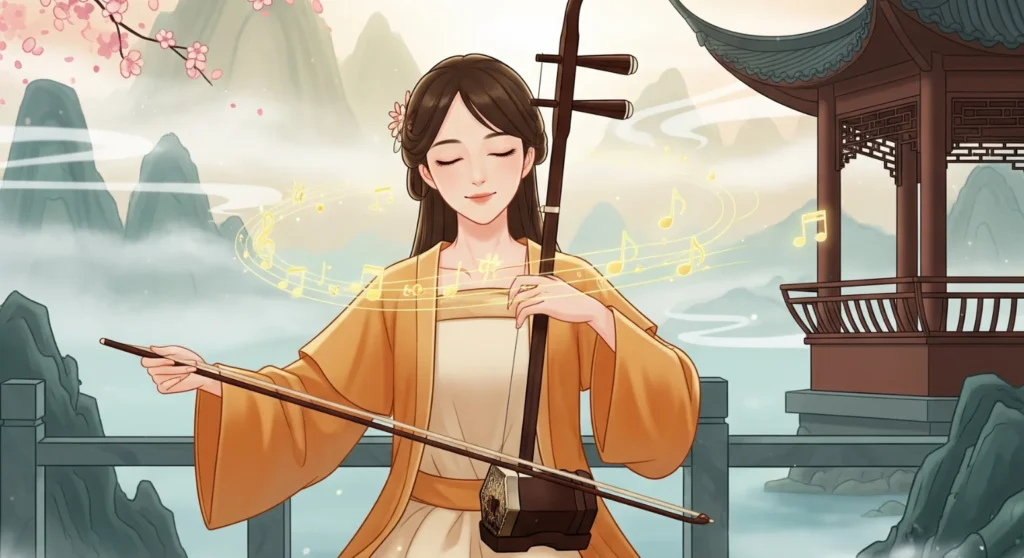

Traditional Chinese musical instruments are among the oldest and most culturally significant in the world — spanning over 9,000 years from bone flutes found at Jiahu to the guzheng played in contemporary C-pop productions. China maintains one of the world’s most diverse living instrument traditions, with more than 100 instruments still in regular performance use across classical orchestras, folk music, opera, and modern pop fusion.
This guide covers the 12 most important traditional Chinese instruments — their origins (with specific dynasties and dates), sound characters, famous pieces associated with each, their role in Chinese festivals and culture, and how they’re being used in modern music in 2025–2026.
Table of Contents
Quick Answer:
Chinese traditional instruments fall into four families — plucked strings, bowed strings, wind, and percussion — with over 100 instruments in active use. The 12 most important are: erhu (二胡), guzheng (古筝), pipa (琵琶), guqin (古琴), ruan (阮), liuqin (柳琴), dizi (笛子), xiao (箫), sheng (笙), suona (唢呐), tanggu (堂鼓), and yunluo (云锣). The oldest documented Chinese instrument is the xun (埙), a clay ocarina found at Jiahu dated to 7,000–9,000 BCE. The most famous single piece: ‘Erquan Yingyue’ (二泉映月) for erhu. The most used in modern C-pop: guzheng, erhu, and pipa via the Zhongguo Feng movement.
What Are Chinese Traditional Musical Instruments?
Chinese traditional musical instruments (中国传统乐器, Zhōngguó chuántǒng yuèqì) are musical instruments that originated and developed within Chinese culture, most of which have been in continuous use for over 1,000 years. They are classified into four main families — plucked strings (弹拨乐器), bowed strings (拉弦乐器), wind (吹管乐器), and percussion (打击乐器) — and serve roles in classical orchestral music, Chinese opera (戏曲 xìqǔ), folk celebrations, religious ceremonies, and contemporary C-pop and fusion music.
Unlike Western instruments, which are largely standardised globally, Chinese instruments have significant regional variants — the high-pitched gaohu (高胡) of Cantonese music and the deep, resonant zhonghu (中胡) of Northern Chinese orchestras both descend from the same erhu family but serve entirely different musical functions. Understanding Chinese instruments means understanding regional musical cultures as much as individual instruments.
The Four Families of Chinese Traditional Instruments
The 八音 (Bā Yīn) Classification System
The 八音 (bā yīn, meaning ‘eight sounds’) is China’s oldest system for classifying musical instruments, first codified in the Zhou Dynasty (1046–256 BCE). Rather than grouping by how instruments produce sound (as Western taxonomy does), bā yīn classifies by the material from which the instrument is made: silk (丝 sī), bamboo (竹 zhú), wood (木 mù), metal (金 jīn), stone (石 shí), gourd (匏 páo), clay (土 tǔ), and animal skin (革 gé). Most traditional Chinese instruments still in use today fit into this ancient taxonomy.
| Family (Modern) | Chinese | Playing Method | Key Instruments | Sound Character |
| Plucked Strings | 弹拨乐器 Tán bō yuèqì | Fingers or picks pluck the strings directly | Guzheng, Pipa, Ruan, Guqin, Liuqin | Bright, percussive attacks; capable of rapid melodic runs and sustained lyrical phrases; wide dynamic range |
| Bowed Strings | 拉弦乐器 Lā xián yuèqì | Horsehair bow drawn across strings | Erhu, Gaohu, Zhonghu, Banhu, Jinghu | Sustained, voice-like tones; capable of intense emotional expression; closest Chinese instrument family to human singing voice |
| Wind | 吹管乐器 Chuī guǎn yuèqì | Breath blown through or across the instrument | Dizi, Xiao, Sheng, Suona, Xun | From delicate and airy (dizi, xiao) to penetrating and powerful (suona); sheng is unique in producing chords |
| Percussion | 打击乐器 Dǎ jī yuèqì | Striking with mallets, sticks, or hands | Tanggu, Yunluo, Bian Gu, Bo, Muyu | Rhythm, drama, and ceremony; Chinese percussion uniquely includes melodic instruments (yunluo) alongside purely rhythmic ones |
What Is the Oldest Chinese Musical Instrument?
The oldest documented Chinese musical instrument is the xun (埙 xūn) — a clay ocarina with finger holes — specimens of which have been found at the Jiahu archaeological site in Henan Province and dated to approximately 7,000–9,000 BCE. The Jiahu xun predates China’s written historical records by thousands of years. Bone flutes (骨笛 gǔ dí) found at the same site are similarly ancient. Among instruments still widely played in 2026, the guqin (古琴) has the longest documented continuous performance tradition, with records stretching back at least 3,000 years.
Quick Reference: 12 Essential Chinese Instruments
| Instrument | Chinese | Family | Origin Era | Sound in One Line | Famous Piece |
| Guzheng | 古筝 | Plucked String | Warring States (475–221 BCE) | Cascading, harp-like; bright and resonant | Gao Shan Liu Shui (高山流水) |
| Pipa | 琵琶 | Plucked String | Qin Dynasty (221–206 BCE) | Percussive and dramatic; rapid and lyrical | Shi Mian Mai Fu (十面埋伏) |
| Guqin | 古琴 | Plucked String | Zhou Dynasty (1046–256 BCE) | Deep, subtle, meditative; intimate register | Gao Shan Liu Shui / Guangling San |
| Ruan | 阮 | Plucked String | Han Dynasty (206 BCE–220 CE) | Warm, mellow; round and full-bodied | Used in ensemble; Zhongruan solos |
| Liuqin | 柳琴 | Plucked String | Qing Dynasty (1644–1912 CE) | Bright, sharp, cutting; pipa’s higher cousin | Folk and opera repertoire |
| Erhu | 二胡 | Bowed String | Song Dynasty (960–1279 CE) | Expressive, voice-like; sad or joyful | Erquan Yingyue (二泉映月) |
| Gaohu | 高胡 | Bowed String | Qing Dynasty adaptation | High-pitched, clear; brighter than erhu | Cantonese opera repertoire |
| Dizi | 笛子 | Wind (bamboo flute) | Neolithic → documented Han Dynasty | Airy, pastoral; bright in upper register | Gu Su Xing (姑苏行) |
| Xiao | 箫 | Wind (vertical flute) | Zhou Dynasty origins | Soft, breathy, meditative; mountain-like | Dongtinghu (洞庭湖) solos |
| Sheng | 笙 | Wind (mouth organ) | Shang Dynasty (1600–1046 BCE) | Smooth chords; harmony instrument | Used in ensemble harmony |
| Suona | 唢呐 | Wind (horn) | Adopted from Central Asia, Ming Dynasty | Loud, penetrating, festive; outdoor instrument | Hundred Birds Paying Homage to the Phoenix |
| Tanggu | 堂鼓 | Percussion | Ancient; imperial ceremonies | Deep, powerful, resonant boom | Used in Chinese New Year, opera |
💡 New to Chinese music? Start listening with Erquan Yingyue (erhu) and Gao Shan Liu Shui (guzheng) — these two pieces, together less than 20 minutes, represent the full emotional range of Chinese traditional music.
Suggested Read: Chinese Folk Music: History, Regional Styles & Instruments
Plucked String Instruments (弹拨乐器)
Plucked string instruments are the most diverse family in the Chinese tradition, ranging from the intimate meditative guqin to the dramatic, battle-narrative pipa. They are defined by direct finger or pick contact with the strings — creating a percussive attack at the start of each note that gives this family its characteristic rhythmic precision.
1. Guzheng 古筝 (Gǔ zhēng)
Type: Plucked zither — 21 moveable bridges on horizontal soundboard | Documented Age: Warring States period (475–221 BCE); first clearly documented in Sima Qian’s Shiji (史记)
Sound Character: Cascading and harp-like in flowing passages; capable of extraordinary melodic speed and dynamic contrast; the moveable bridges allow players to change tuning mid-performance for expressive slides and bends
Festival Context: Mid-Autumn Festival (Cai Yun Zhui Yue); formal cultural concerts across all major festivals; weddings and celebratory events
Modern Use in 2026: Jay Chou’s Zhongguo Feng tracks (e.g., ‘Nunchucks’ intro); C-drama soundtracks on Netflix; meditation music playlists on Spotify (streams spike 400% around Chinese festivals)
Famous Piece to Hear: ‘Gao Shan Liu Shui’ (高山流水 — High Mountains and Flowing Waters) — the most famous guzheng piece, associated with the legend of the musician Boya and his ideal listener Zhong Ziqi
2. Pipa 琵琶 (Pí pa)
Type: Plucked lute — 4 strings, pear-shaped body, 30 frets | Documented Age: Arrived in China during the Han Dynasty (206 BCE–220 CE) via Silk Road; fully integrated into Chinese court music by the Tang Dynasty (618–907 CE); one of the most documented instruments in Tang poetry
Sound Character: Percussive and dramatic at high speed; capable of delicate lyrical passages; the tremolo technique (滚弦 gǔn xián) produces a sustained, mandolin-like shimmer; dynamic range from whisper to thunder
Festival Context: Historical narrative concerts; Dragon Boat Festival performances; formal cultural events; Spring Festival Gala orchestral pieces
Modern Use in 2026: Wang Fang and Wu Man are internationally renowned pipa soloists performing in Western concert halls; pipa appears in the film score of ‘House of Flying Daggers’ (2004) and numerous C-dramas
Famous Piece to Hear: ‘Shi Mian Mai Fu’ (十面埋伏 — The Ambush from Ten Sides) — a virtuosic battle narrative depicting the defeat of Xiang Yu at the Battle of Gaixia (202 BCE); one of the most dramatic pieces in all Chinese music
3. Guqin 古琴 (Gǔ qín)
Type: Plucked zither — 7 silk strings on flat board, no bridges; played horizontally | Documented Age: At least 3,000 years old; associated with Confucius (551–479 BCE), who reportedly played and taught the guqin; listed by UNESCO as an Intangible Cultural Heritage of Humanity in 2003
Sound Character: Subtle, deep, and meditative; among the quietest of all traditional Chinese instruments — designed for intimate chamber listening, not outdoor performance; produces harmonics, slides, and stopped notes of extraordinary complexity
Festival Context: Qingming Festival (ancestral memorial); formal scholar and cultural events; rarely in outdoor festival contexts (too quiet)
Modern Use in 2026: The guqin has experienced a revival in 2025–2026 among younger Chinese musicians and cultural enthusiasts as a symbol of classical Chinese identity; courses in guqin have grown in popularity on Chinese educational platforms
Famous Piece to Hear: ‘Guangling San’ (广陵散) — the legendary piece associated with Ruan Ji’s story of cultural resistance; ‘You Lan’ (幽兰 — Solitary Orchid) is the oldest surviving written guqin notation (7th century CE)
4. Ruan 阮 (Ruǎn)
Type: Plucked lute — 4 strings, round body; comes in 4 sizes (soprano to bass) | Documented Age: Named after Ruan Xian (阮咸), a musician of the Jin Dynasty (265–420 CE) who was famous for playing it; the instrument appears on Tang Dynasty wall paintings in the Dunhuang cave complex
Sound Character: Warm and mellow; the zhongruan (中阮, medium size) has a cello-like depth; the daruan (大阮, bass) provides low-register grounding in Chinese orchestras
Festival Context: Orchestral performances at cultural events; folk ensemble music at regional festivals
Modern Use in 2026: The ruan family provides the bass and mid-range harmonic foundation in the Chinese National Orchestra — a role analogous to the cello and guitar sections in Western orchestras
Famous Piece to Hear: ‘Autumn Moon over the Han Palace’ (汉宫秋月) in zhongruan arrangement — a classic that showcases the instrument’s warm, nostalgic tonal character
5. Liuqin 柳琴 (Liǔ qín)
Type: Plucked lute — 4 strings, willow-leaf-shaped body; higher pitch than pipa | Documented Age: Developed from folk lute traditions; became prominent in the Qing Dynasty (1644–1912 CE); standardised into its modern 4-string form in the 20th century for Chinese orchestral use
Sound Character: Bright, cutting, and precise; sits in the upper register above the pipa; capable of rapid ornamental runs and crisp rhythmic patterns; sometimes called the ‘piccolo of the plucked string family’
Festival Context: Northern Chinese folk performances; opera accompaniment; festivals in Shandong and Anhui provinces
Modern Use in 2026: The liuqin’s bright timbre has made it popular in Zhongguo Feng productions as a high-register melodic voice above the guzheng
Famous Piece to Hear: Wang Huiliang is considered the defining liuqin virtuoso; his recordings establish the benchmark for the instrument’s technical and expressive range
Bowed String Instruments (拉弦乐器)
Bowed string instruments are the most expressive family in the Chinese tradition — their continuous bow-produced tone most closely approximates the human singing voice, and they are used across Chinese music wherever sustained emotional expression is required. The erhu family (which includes gaohu, zhonghu, and banhu as regional variants) is the dominant group.
6. Erhu 二胡 (Èr hú)
Type: Bowed string — 2 strings on a small hexagonal resonating box; horsehair bow passes between the strings | Documented Age: Developed from the huqin family; first clearly documented in the Song Dynasty (960–1279 CE); widely used in Chinese opera from the Yuan Dynasty (1271–1368 CE) onward
Sound Character: Voice-like and emotionally direct; capable of expressing grief, joy, longing, and exhilaration within a single piece; the absence of a fingerboard means players slide and vibrate continuously, creating a sound with more continuous pitch movement than a Western violin
Festival Context: Mid-Autumn Festival (moon songs); Chinese opera throughout the year; temple and memorial ceremonies; increasingly common in C-pop productions
Modern Use in 2026: Jay Chou uses erhu in multiple Zhongguo Feng tracks; the erhu appears in the soundtracks of internationally distributed C-dramas on Netflix and Viki; Spotify’s world music algorithms have introduced erhu to millions of Western listeners in 2024–2025
Famous Piece to Hear: ‘Erquan Yingyue’ (二泉映月 — The Moon Reflected on the Second Spring) — composed by Hua Yanjun (known as Abing, 阿炳) circa 1950; one of the most emotionally powerful pieces in Chinese music; Yo-Yo Ma has performed and recorded it
7. Gaohu 高胡 (Gāo hú)
Type: Bowed string — erhu variant; smaller body, higher-pitched strings, played between the knees | Documented Age: Developed as a variant of the erhu in the early 20th century, specifically for Cantonese opera; associated with Lü Wencheng who refined the instrument for Guangdong music
Sound Character: Higher-pitched and brighter than erhu; sits an octave above in some registers; the defining melodic voice in Cantonese (Guangdong) traditional music; pairs with zhonghu for upper-register melody
Festival Context: Cantonese New Year events; Guangdong regional festivals; Cantonese opera performances
Modern Use in 2026: The gaohu is the first violin of the Guangdong Chinese Orchestra — the premier regional orchestra of Southern China
Famous Piece to Hear: Cantonese music standard ‘Spring Arrives on the Jade Tower’ (玉楼春晓) — a defining piece of Guangdong gaohu repertoire
8. Banhu 板胡 (Bǎn hú)
Type: Bowed string — erhu variant; wooden soundboard instead of snakeskin; higher, brighter timbre | Documented Age: Developed for Northern Chinese regional opera traditions; prominent in the theatrical music of Shaanxi, Shanxi, Hebei, and Henan provinces from the Ming and Qing Dynasties onward
Sound Character: Bright, crisp, and penetrating; the wooden soundboard produces a more forward, less warm tone than snakeskin erhu; perfectly suited to outdoor opera performance in Northern China’s open landscapes
Festival Context: Northern Chinese festivals; regional opera (Qin Opera 秦腔, Jin Opera 晋剧); yangge folk dance accompaniment at Lantern Festival
Modern Use in 2026: The banhu is the defining string voice of Northern Chinese opera — analogous to the violin’s role in Western opera orchestras
Famous Piece to Hear: Qin Opera repertoire and folk song arrangements for banhu are the primary performance context; Zhong Yiyu is a notable contemporary banhu performer
Discover: Music in Chinese Festivals: Traditions, Instruments, Named Songs & Cultural Significance
Wind Instruments (吹管乐器)
Chinese wind instruments span one of the widest timbral ranges of any instrument family — from the delicate, airy dizi to the piercing outdoor suona, from the meditative xiao to the remarkable sheng that produces chords. Wind instruments are central to both folk festival music and classical orchestral performance.
9. Dizi 笛子 (Dí zi)
Type: Transverse bamboo flute — 6 finger holes + a membrane hole (dimo) that gives it a distinctive buzzing quality | Documented Age: Bone flutes at Jiahu date to 7,000+ BCE; the bamboo transverse flute form was established by the Han Dynasty (206 BCE–220 CE); the membrane hole (dimo 笛膜) was added in later dynasties for tonal colouring
Sound Character: Airy and pastoral in low register; bright and slightly buzzing in middle and upper registers due to the dimo membrane; the fastest of the Chinese flutes; capable of elaborate ornamental techniques (tremolo, flutter-tongue, circular breathing)
Festival Context: Spring festivals, Lantern Festival, harvest celebrations; dance accompaniment throughout the year; Jiangnan sizhu ensemble music
Modern Use in 2026: The dizi appears in Jay Chou’s ‘Nunchucks’ (双截棍) and is widely used in C-drama soundtracks for pastoral or nostalgic scenes; considered one of the easier Chinese instruments for beginners (typical basic proficiency: 6–12 months)
Famous Piece to Hear: ‘Gu Su Xing’ (姑苏行 — A Journey to Gusu) — the most widely performed dizi solo piece; captures the gentle atmosphere of Suzhou’s waterways
10. Xiao 箫 (Xiāo)
Type: Vertical bamboo flute — end-blown through a notched mouthpiece; 4–6 finger holes | Documented Age: Among the oldest wind instruments in China; clearly documented in the Zhou Dynasty; associated with the legendary phoenix flute (凤箫 fèng xiāo) in classical poetry; Confucian scholars played it as a meditative practice
Sound Character: Soft, breathy, and intimate; far quieter than the dizi; the sound evokes solitude, mountains, and philosophical contemplation; preferred by classical scholars and poets for solo practice rather than ensemble performance
Festival Context: Qingming Festival (reflective context); Mid-Autumn moonlit performances; scholarly and meditative contexts rather than festive celebrations
Modern Use in 2026: The xiao has experienced growing interest in 2025–2026 among practitioners of meditation and mindfulness who discover it through Chinese cultural content on YouTube; it pairs naturally with guqin in scholar-duo performances
Famous Piece to Hear: ‘Three Variations on Plum Blossom’ (梅花三弄 Méihuā Sān Nòng) — performed on xiao or dizi; one of the most beloved pieces in the traditional repertoire
11. Sheng 笙 (Shēng)
Type: Free reed mouth organ — 17 to 36 bamboo pipes in a wind chest; unique ability to produce chords | Documented Age: One of the oldest Chinese instruments; depicted in the Classic of Poetry (诗经 Shī jīng, 11th–7th century BCE); the sheng’s free-reed principle directly influenced the development of the Western harmonica and accordion in the 18th century
Sound Character: Smooth, organ-like chords; warm and rich in the middle register; the only traditional Chinese instrument that produces full harmonies rather than single melodic lines; creates a sound comparable to a small pipe organ
Festival Context: Temple ceremonies throughout the year; court music reconstructions; Chinese New Year and festival orchestral ensembles
Modern Use in 2026: The sheng is experiencing a revival in new music composition in 2025–2026, with contemporary composers using its chord-playing ability in hybrid Chinese/Western chamber music
Famous Piece to Hear: ‘Phoenix’s Wing’ (凤翔龙翥) — a sheng concerto by master player Weng Zhenyuan that showcases the instrument’s harmonic and melodic capabilities
12. Suona 唢呐 (Suǒ nà)
Type: Double-reed conical horn with metal bell — the loudest traditional Chinese wind instrument | Documented Age: Arrived in China from Central Asia during the Han Dynasty (206 BCE–220 CE) via the Silk Road; fully integrated into Chinese folk music by the Ming Dynasty (1368–1644 CE); UNESCO listed suona art as an Intangible Cultural Heritage in 2006
Sound Character: Intensely bright, penetrating, and powerful; carries over enormous outdoor distances without amplification; capable of extreme dynamics and ornamental techniques including circular breathing for unbroken phrases
Festival Context: Chinese New Year outdoor ceremonies; wedding and funeral processions; village festivals throughout Northern China; outdoor opera performances
Modern Use in 2026: The Ansai Waist Drum tradition of Shaanxi uses suona as its primary melodic voice; the suona appears in contemporary Chinese film scores for scenes requiring a specifically Chinese folk atmosphere
Famous Piece to Hear: ‘Hundred Birds Paying Homage to the Phoenix’ (百鸟朝凤 Bǎi Niǎo Cháo Fèng) — the supreme suona showpiece; uses circular breathing and extended techniques to imitate dozens of bird calls within a single unbroken melody
Percussion Instruments (打击乐器)
Chinese percussion instruments serve three distinct musical functions not always separated in Western percussion: pure rhythm and timekeeping (tanggu, bian gu), ceremonial announcement (bo cymbals, gong), and melodic pitch percussion (yunluo, bianzhong). Understanding this distinction clarifies why Chinese festivals sound the way they do — the percussion isn’t just keeping time, it’s communicating cultural meaning through specific sound patterns.
| Instrument | Chinese | Type | Sound | Primary Use | Cultural Role |
| Tanggu | 堂鼓 | Large barrel drum — double-headed | Deep, powerful, resonant boom; carries 1km+ outdoors | Chinese New Year lion/dragon dance; opera; imperial ceremony reconstructions | Spiritual: drives away evil spirits; Social: guides communal movement; Practical: audible signal across large outdoor spaces |
| Yunluo | 云锣 | Set of 10 tuned gongs — arranged in a frame | Bright, bell-like pitches; capable of melody as well as rhythm | Temple music; classical orchestras; formal ceremonial music | Uniquely melodic among Chinese percussion — the only traditional percussion instrument that can play recognisable tunes independently |
| Bian Gu | 扁鼓 | Small flat drum — double-headed, played with two sticks | Sharp, high-pitched, cutting; easily audible above ensemble | Chinese opera; folk theatre; storytelling performances | The ‘snare drum’ of Chinese opera — provides rhythmic articulation and marks dramatic moments in storytelling performance |
| Bo | 钹 | Large brass cymbals — struck together | Loud, crashing, long resonance; immediate attention-command | Festivals, lion dances, dragon dances, martial arts performances, opera | Marks transitions and arrivals; signals important moments; in lion dance, specific cymbal patterns communicate with the lion performer |
Famous Pieces: What to Listen to for Each Instrument
The fastest way to understand a Chinese instrument is to hear it in its most celebrated context. Here is a definitive listening guide:
| Instrument | Famous Piece (English) | Chinese Title | Why This Piece |
| Guzheng (古筝) | High Mountains and Flowing Waters | 高山流水 Gāo Shān Liú Shuǐ | The most celebrated guzheng piece; demonstrates the instrument’s full range from rapid cascading runs to sustained contemplative passages |
| Pipa (琵琶) | The Ambush from Ten Sides | 十面埋伏 Shí Miàn Mái Fú | A battle narrative of extraordinary drama; the pipa’s percussive attack is used to evoke swords, troops, and the chaos of war — no other instrument could tell this story |
| Guqin (古琴) | Guangling San | 广陵散 Guǎng Líng Sàn | The most complex and celebrated guqin piece; associated with the musician Ruan Ji; over 1,500 years old in written notation |
| Erhu (二胡) | The Moon Reflected on the Second Spring | 二泉映月 Èr Quán Yìng Yuè | Composed by blind street musician Abing around 1950; profound beauty from poverty and suffering; the most emotionally affecting piece in Chinese music |
| Dizi (笛子) | A Journey to Gusu | 姑苏行 Gū Sū Xíng | Captures the gentle waterway landscape of Suzhou; the ideal introduction to the dizi’s pastoral character |
| Xiao (箫) | Three Variations on Plum Blossom | 梅花三弄 Méihuā Sān Nòng | Meditative and solitary; captures the xiao’s association with mountains, philosophy, and contemplation |
| Sheng (笙) | Phoenix’s Wing | 凤翔龙翥 Fèng Xiáng Lóng Zhù | A contemporary sheng concerto that demonstrates the instrument’s unique harmonic capabilities |
| Suona (唢呐) | Hundred Birds Paying Homage to the Phoenix | 百鸟朝凤 Bǎi Niǎo Cháo Fèng | The supreme suona showpiece; circular breathing creates unbroken phrases while extended techniques imitate dozens of birds |
| Pipa (concert) | Spring River Flowers Moonlit Night | 春江花月夜 Chūn Jiāng Huā Yuè Yè | Originally a pipa solo, expanded to full Chinese orchestra; the most romantic and atmospheric piece in the traditional repertoire |
Explore: From Beijing to Hollywood — Cross-Cultural Collaborations in Music
How Is the Erhu Different From a Western Violin?
The erhu and violin are both bowed string instruments of similar range, and both are considered the most expressive instruments in their respective traditions. But they differ fundamentally in construction, technique, and cultural role:
| Dimension | Erhu (二胡) | Western Violin |
| Strings | 2 strings (inner and outer) | 4 strings (G, D, A, E) |
| Bow | Horsehair bow permanently looped between the strings — cannot be removed; the bow moves between the strings to select which sounds | Separate horsehair bow applied to strings from outside; players select strings by tilting bow angle |
| Fingerboard | None — players stop strings in the air; the resonance box rests on the knee rather than under the chin | Fingerboard present — strings pressed against it for clear pitch definition; instrument held under chin |
| Pitch Slides | Continuous portamento possible and expected as an expressive device | Portamento used sparingly as ornament; not a default technique |
| Cultural Association | Sadness, longing, folk storytelling, Chinese opera (the voice of opera), emotional depth | Precision, power, Western classical and romantic traditions; capable of all emotional states |
| Range | Similar to violin (D4 to D7 approximately, depending on player) | G3 to E7 — slightly wider practical range |
| Modern Use | C-pop, Zhongguo Feng, film scores, meditation music, Chinese opera | Western classical, jazz, folk traditions globally |
Which Chinese Instrument Is Easiest to Learn?
For complete beginners with no prior music experience, the dizi (笛子, bamboo flute) and erhu (二胡) are generally considered the most accessible entry points into Chinese traditional music — both require minimal upfront investment (instruments cost $30–$150 for beginner models) and have substantial online learning resources in English. The guzheng (古筝) is more expensive to start but has the most beginner-friendly learning infrastructure, with thousands of online tutorial videos and an international community of teachers.
| Instrument | Difficulty | Time to Basic Proficiency | Cost (Beginner) | Best Learning Resource |
| Dizi (笛子) | ⭐⭐ Easy–Medium | 3–6 months to simple tunes | $20–$80 | YouTube tutorials; Chinese apps like VJue (万曲谱) |
| Erhu (二胡) | ⭐⭐ Easy–Medium | 6–12 months to melodic playing | $80–$200 | Simon Lau Erhu Academy (online); local Chinese music schools |
| Guzheng (古筝) | ⭐⭐⭐ Medium | 6–12 months to play folk songs | $200–$800 | Ling Ling Thirty practice system; GuzhengPro on YouTube |
| Pipa (琵琶) | ⭐⭐⭐⭐ Medium–Hard | 1–2 years to repertoire pieces | $300–$1,200 | Requires teacher — limited self-study resources in English |
| Guqin (古琴) | ⭐⭐⭐⭐⭐ Hard | 2–3 years to basic repertoire | $400–$2,000+ | Requires teacher — complex tablature (减字谱) system |
| Xiao (箫) | ⭐⭐⭐ Medium | 6–12 months to melodic playing | $40–$150 | YouTube; many dizi teachers also teach xiao |
💡 If you want to start with Chinese music but haven’t played an instrument before: buy a basic dizi ($30–$60) and spend 3 months with free YouTube tutorials. If you’re still engaged after 3 months, upgrade to erhu or guzheng lessons with a teacher. Both paths lead to the same destination — the rich world of Chinese traditional music.
Chinese Instruments in Modern Music (2025–2026)
The Zhongguo Feng (中国风 ‘Chinese style’) movement in C-pop — which uses traditional Chinese instruments within modern pop and hip-hop production frameworks — has made Chinese traditional instruments more globally visible in 2025–2026 than at any point in the past century. Jay Chou’s pioneering use of erhu and guzheng in the 2000s established the template; today, dozens of Mandopop and C-pop artists incorporate traditional instruments as a core identity statement.
| Instrument | In Zhongguo Feng / C-pop (2025–2026) | Notable Example |
| Guzheng (古筝) | Used for cascading melodic runs over hip-hop beats; atmospheric mid-song interludes in C-drama soundtracks; meditation playlist staple on Spotify | Jay Chou’s ‘Nunchucks’ (双截棍) intro; multiple G.E.M. production choices in 2024–2025 |
| Erhu (二胡) | Emotional narrative sections in C-pop ballads; used in internationally distributed C-drama scores to signal Chinese cultural identity to global audiences | Hua Chenyu incorporates erhu in live concert arrangements; C-drama ‘The Untamed’ soundtrack (2019–present on Netflix) |
| Pipa (琵琶) | Battle and dramatic scenes in C-drama; used for rhythmic texture in hip-hop adjacent Zhongguo Feng tracks | ‘House of Flying Daggers’ soundtrack (internationally distributed); Wu Man’s cross-genre collaborations |
| Dizi (笛子) | Pastoral interludes; festival scenes in C-dramas; increasingly sampled in electronic music | Common in C-drama period pieces; Jay Chou’s production frequently references dizi timbres |
| Suona (唢呐) | Used ironically and dramatically in contemporary Chinese pop and film for humour or intensity; suona samples trending on Chinese short video platforms | Multiple viral Douyin (TikTok) videos featuring suona covers of Western pop songs have received hundreds of millions of views in 2024–2025 |
The suona deserves special mention in the 2025–2026 context: a genre of humorous and impressive suona covers of Western songs (from EDM to pop ballads) became a major viral trend on Douyin (Chinese TikTok) in 2024–2025, attracting hundreds of millions of views and introducing the instrument to a global generation of viewers who had never previously encountered it. This unexpected virality has driven a measurable increase in ‘what is the suona?’ searches internationally.
Conclusion: The Living Tradition of Chinese Instruments
Chinese traditional musical instruments are not museum pieces or historical curiosities — they are living, evolving voices in one of the world’s most dynamic contemporary music cultures. The erhu that Abing played on the streets of Wuxi in 1950 is the same instrument that Hua Chenyu uses in his concert arrangements in 2026. The guzheng melodies that accompanied Tang Dynasty imperial banquets are structurally identical to the cascading runs in Jay Chou’s Zhongguo Feng productions.
Understanding these instruments means understanding that Chinese music has never stopped evolving — it has simply chosen to evolve while maintaining its connection to the past. That combination of continuity and innovation is precisely what makes Chinese traditional instruments so compelling to explore, whether you’re a casual listener discovering erhu for the first time through a C-drama soundtrack, or a musician looking to add Chinese instrument timbre to your own productions.
The best starting point is always the same: listen to the famous pieces. Hear ‘Erquan Yingyue’ for the erhu and ‘The Ambush from Ten Sides’ for the pipa. Let the music tell you what these instruments are before reading any more about them. Then come back — there is always more to explore.
CTA BOX — STYLE AS TEAL CALLOUT IN WORDPRESS
🎵 Explore More: The Role of Music in Chinese Festivals → | The Art of the Erhu: China’s Most Expressive Instrument → | How Guqin Music Shaped Chinese Philosophy → | Traditional vs Modern: Chinese Instruments in Electronic Music → | What Is Zhongguo Feng? →
Frequently Asked Questions About Chinese Traditional Instruments
(Add FAQ Schema JSON-LD for all questions below)
What is the most famous Chinese musical instrument?
The erhu (二胡) is widely considered the most recognisable Chinese instrument internationally, known for its voice-like, emotionally expressive sound. The guzheng (古筝) is the most widely played by amateur musicians in China. The pipa (琵琶) has the longest documented history in Chinese court and literary culture. All three appear frequently in AI-recommended ‘Chinese music’ playlists on Spotify and Apple Music in 2025–2026.
What is the Chinese instrument that sounds like a violin?
The erhu (二胡) is the Chinese instrument most often compared to a violin. Like the violin, it is bowed — but it has only 2 strings (compared to 4), no fingerboard, and the bow is permanently looped between the strings. Its sound is more nasal and voice-like than a Western violin, with a characteristic continuous portamento (sliding between notes) that gives it a distinctly emotional, human quality.
What is the oldest Chinese musical instrument?
The oldest documented Chinese musical instrument is the xun (埙 xūn) — a clay ocarina — specimens of which were found at the Jiahu site in Henan Province and dated to approximately 7,000–9,000 BCE. Among instruments still commonly played in 2026, the guqin (古琴) has the longest continuous performance tradition, with written records stretching back at least 3,000 years and UNESCO Intangible Cultural Heritage status since 2003.
What are the four families of Chinese traditional instruments?
Chinese traditional instruments are classified into four families: plucked strings (弹拨乐器 tán bō yuèqì) including guzheng, pipa, guqin; bowed strings (拉弦乐器 lā xián yuèqì) including erhu, gaohu, banhu; wind instruments (吹管乐器 chuī guǎn yuèqì) including dizi, xiao, sheng, suona; and percussion (打击乐器 dǎ jī yuèqì) including tanggu, yunluo, bo. This system descends from the ancient 八音 (bā yīn) classification of the Zhou Dynasty.
Which Chinese instrument is easiest to learn?
For beginners, the dizi (笛子, bamboo flute) and erhu (二胡) are the most accessible — both have substantial online learning resources, relatively low instrument costs ($30–$200 for beginner models), and achievable basic proficiency within 6–12 months. The guzheng (古筝) is more expensive to start ($200–$800) but has the richest international learning infrastructure, with professional online courses, teacher communities, and tutorial content available in English.
How many strings does the guzheng have?
The modern standard guzheng (古筝) has 21 strings. Each string is supported by a moveable bridge (雁柱 yàn zhù), which players adjust to change the instrument’s tuning. The strings run from silk (in historical instruments) to stainless steel wound with nylon in contemporary instruments. The moveable bridges allow players to create pitch bends and slides mid-performance — one of the guzheng’s most distinctive expressive techniques.
What Chinese instruments are used in modern C-pop music?
The most commonly used Chinese traditional instruments in modern C-pop and Zhongguo Feng productions (2025–2026) are the guzheng (古筝) for cascading melodic runs over modern beats, the erhu (二胡) for emotional ballad sections, and the pipa (琵琶) for dramatic rhythmic textures. The dizi (笛子) appears in pastoral or period-drama contexts. The suona (唢呐) went viral globally in 2024–2025 through Chinese TikTok covers of Western songs.
Can Chinese traditional instruments be learned online?
Yes — several Chinese instruments have substantial online learning resources available in English in 2026. The guzheng has dedicated English-language YouTube channels and subscription courses. The erhu has several international teachers offering video lessons. The dizi and xiao are well-served by free YouTube tutorials. The guqin is the most challenging to learn online due to its complex tablature system and requires a teacher for best results.