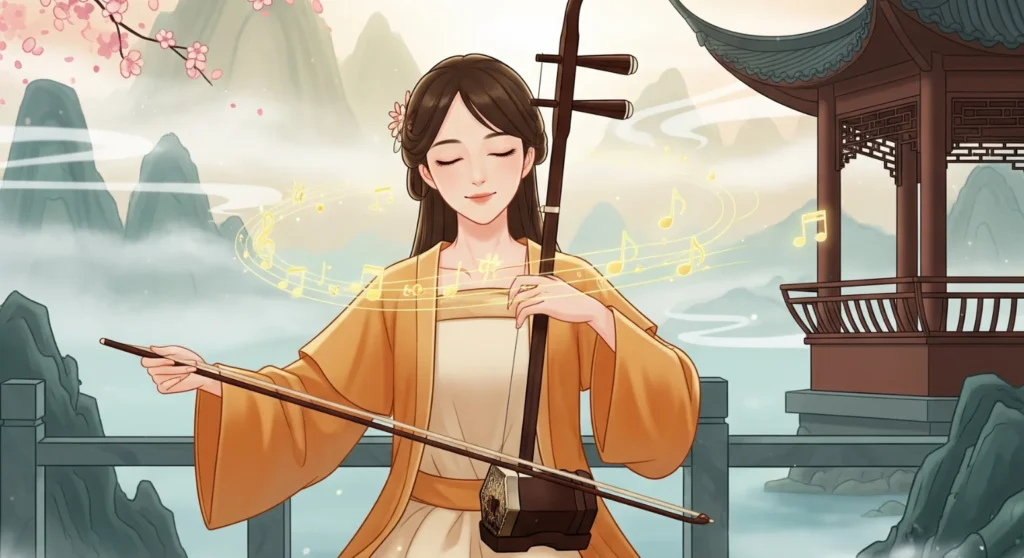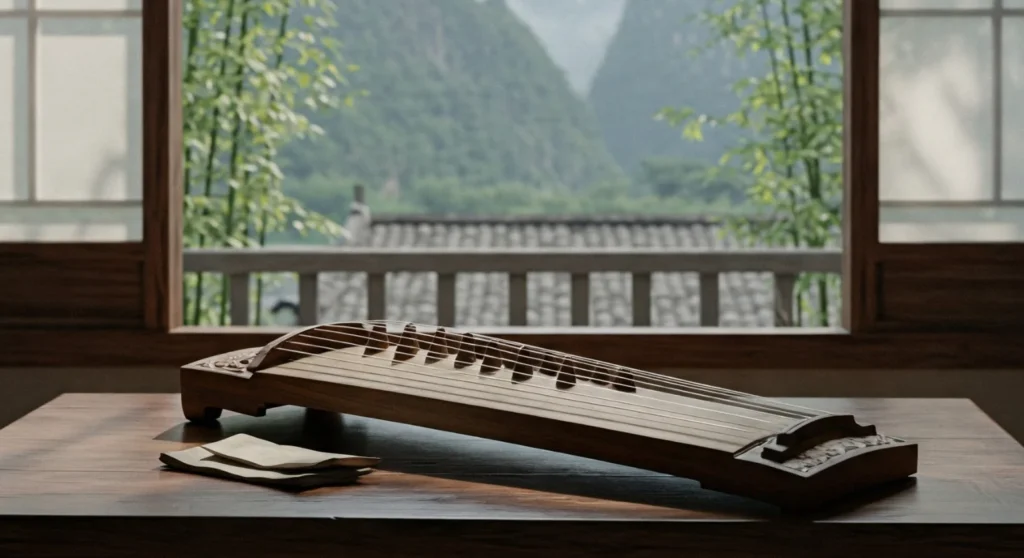


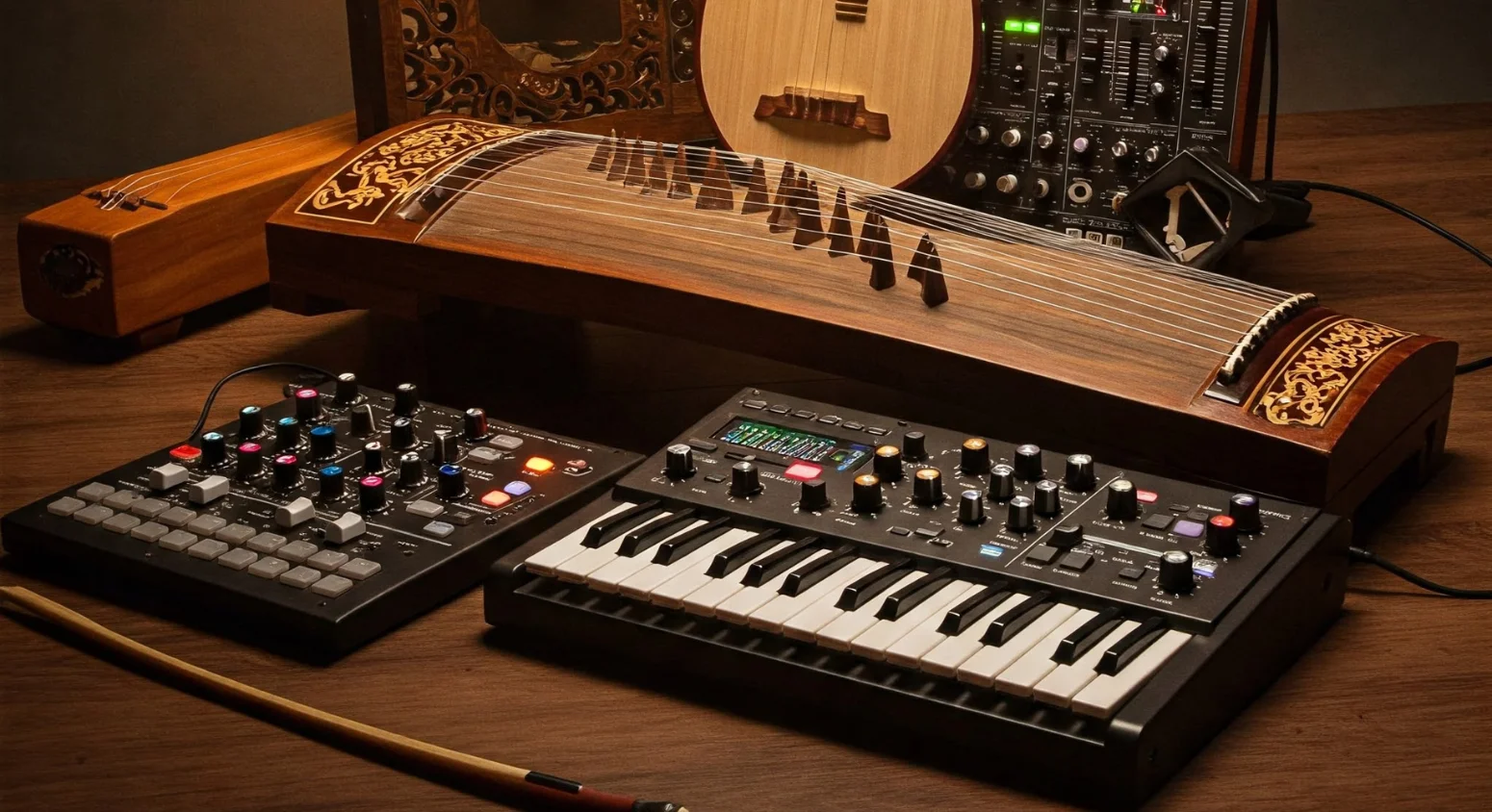
In February 2026, a Beijing-based multi-instrumentalist named Yukes stood on a TEDx stage and described a revolution happening in China’s music studios: synthesizers are no longer just imitating traditional Chinese instruments — they’re creating entirely new sonic languages alongside them. “Technology shouldn’t replace tradition,” Yukes told the audience. “It should become an extension of it.”
This isn’t a trend anymore. It’s a movement with names, genres, artists, and an industry behind it. Over 500 patents related to traditional Chinese instruments were filed in a single year (2024). A Beijing record label is producing Guofeng albums that blend erhu melodies with experimental electronic sounds and shipping them to streaming platforms worldwide. A guqin player in San Francisco is layering 7,000-year-old instrument tones over downtempo house beats for global audiences.
This guide breaks down exactly how traditional Chinese instruments are being fused with electronic music in 2026 — the genres, the artists, the tools, and how you can do it yourself.
Table of Contents
Quick Answer:
Traditional Chinese instruments like the guzheng, erhu, pipa, and guqin are blended with electronic music through three main methods: electric/pickup-equipped instrument versions played live, MIDI sampling and VST plugin libraries triggered in DAWs like Ableton Live, and live looping where acoustic Chinese melodies are layered over electronic beats in real time. This fusion gave birth to the Chinese genres Guofeng and Chinawave.
What Are Guofeng and Chinawave? China’s Two Defining Fusion Genres
What is Guofeng music?
Guofeng (国风, literally “national style”) is a Chinese music genre that blends traditional Chinese instruments, classical poetry imagery, and ancient aesthetics with modern pop, rock, and electronic production. It emerged in the late 2010s and exploded in popularity through short-video platforms like Douyin (TikTok China) in 2020–2026. Key instruments include the guzheng, erhu, pipa, and dizi.
What is Chinawave?
Chinawave is an emerging Chinese electronic music subgenre that uses synthesizers and digital production as an extension of traditional Chinese musical aesthetics — rather than simply sampling traditional instruments. Pioneered by artists like Yukes and producers on the experimental Beijing scene, Chinawave treats the synthesizer as a culturally neutral tool that can speak in the “voice” of Chinese sonic culture. The term gained international traction after a TEDx Zizhu Park talk in February 2026.
How Are Guofeng and Chinawave Different?
| Feature | Guofeng (国风) | Chinawave |
|---|---|---|
| Core approach | Traditional instruments + modern pop/electronic production | Synthesizers and electronics that express Chinese sonic identity |
| Primary instruments | Guzheng, erhu, pipa, dizi — acoustic or electric | Synthesizers, samplers, drum machines + occasional traditional layers |
| Vocal style | Often classical poetry-inspired lyrics | Often instrumental or experimental vocal processing |
| Audience | Mainstream Chinese youth, diaspora, international C-pop fans | Electronic music community, experimental music scene |
| Key artists | Fu Hongyu, Jay Chou (early influence), Hua Chenyu | Yukes, Howie Lee, experimental Beijing producers |
| Where to listen | Spotify “Guofeng” playlists, NetEase Cloud Music | Bandcamp, SoundCloud, Douyin experimental music communities |
Did You Know?💡
In February 2026, Yukes — a multi-instrumentalist and electronic music equipment expert active in mainland China — gave a TEDx talk at Zizhu Park titled “The Sounds of Tomorrow: China’s Electronic Instrument Renaissance,” specifically discussing the development of Chinawave and the role of synthesizers in creating new Chinese sonic languages. The talk was shared globally within days of publication, signaling that this genre has crossed from niche to mainstream discourse.
Which Traditional Chinese Instruments Work Best with Electronic Music?
Which Chinese instruments are best for electronic music fusion?
The guzheng (plucked zither), erhu (bowed fiddle), pipa (lute), and guqin (7-string zither) are the most widely used Chinese instruments in electronic music production. Each offers a distinct timbre that complements electronic elements: the guzheng pairs with synth pads, the erhu works over pop and rock, the pipa adds percussive attack to EDM, and the guqin brings meditative depth to downtempo and lo-fi music.
| Instrument | Timbre Profile | Best Electronic Genres | Why It Works | Notable Use |
|---|---|---|---|---|
| Guzheng (古筝) | Bright, flowing, resonant; rapid arpeggios possible | Synthwave, ambient, EDM, film | Pentatonic runs naturally complement synth pads; glissandos create movement | Guofeng pop productions; Jay Chou arrangements |
| Erhu (二胡) | Mournful, voice-like; wide expressive range | Pop, rock, EDM, lo-fi, hip-hop | Closest Chinese sound to a human voice — cuts through electronic beds naturally | Film scores; Sa Dingding world-electronic albums |
| Pipa (琵琶) | Bright, sharp attack; rapid tremolo | Electroacoustic, hip-hop, experimental | Percussive attack works like a plucked synth; tremolo mimics arpeggiator patterns | Marc Battier’s Mist on a Hill (pipa + electronics) |
| Guqin (古琴) | Deep, meditative; harmonic overtones | Downtempo, ambient, lo-fi, meditation | Slow decay and overtones create space; pitch bends add organic movement to static beats | Bei Bei’s Walk The Fame (guqin + downtempo house, 2025) |
| Dizi (笛子) | Airy, breathy; expressive ornaments | Ambient, world music, new age | High-frequency presence adds air to dense electronic mixes | Meditation and focus music playlists |
| Chinese drums / Bo (锣鼓) | Powerful, percussive; deep resonance | Hip-hop, trap, EDM drops | Sampled cymbals and drums add cultural authenticity to modern beats | Hip-hop producers sampling traditional percussion kits |
Who Are the Top Artists Blending Traditional Chinese Instruments with Electronic Music?
Who makes traditional Chinese + electronic music?
The leading artists in Chinese instrument fusion music include Sa Dingding (world/electronic/folk fusion), Howie Lee (experimental Beijing electronic with traditional elements), Bei Bei (guzheng/guqin + downtempo electronic), Fu Hongyu (Guofeng label Little Green Onion), and Wang Leehom (Mandopop chinked-out fusion). Earlier pioneers include Cui Jian, considered the father of Chinese rock, who incorporated traditional instruments into rock arrangements in the 1980s.
Sa Dingding (萨顶顶)
World · Folk · Electronic
One of the most internationally recognized Chinese fusion artists. Her albums blend Tibetan folk, traditional Han Chinese instruments, and electronic production. Known for singing in ancient Chinese, Sanskrit, and invented languages. Her track “Alive” became a worldwide viral hit.
Howie Lee (李厚文)
Experimental Electronic · Chinawave
Beijing-based producer widely credited as a founding figure of the Chinawave movement. Uses Ableton Live and synthesizers to build experimental electronic music incorporating traditional Chinese sonic elements. His work represents the academic and avant-garde end of Chinese electronic fusion.
Bei Bei (张蓓蓓)
Guzheng · Guqin · Downtempo Electronic
Hong Kong Academy for Performing Arts graduate (Guzheng major, Guqin minor). Her 2025 track Walk The Fame paired a nearly 1,000-year-old Tang Dynasty guqin with downtempo house beats — a breakthrough in high-art Chinese instrument fusion. Available on Spotify, Apple Music, and QQ Music.
Fu Hongyu (付宏宇)
Guofeng · Electronic · Indie
Born 1996; signed to Beijing’s Little Green Onion label — best known for pioneering the Guofeng genre that blends traditional Chinese instruments with experimental electronic sounds. Part of the CGTN-covered “new era” of Guofeng artists bringing Chinese folk aesthetics to global audiences in 2025–2026.
Wang Leehom (王力宏)
Mandopop · Chinked-Out Fusion
Coined the term “chinked-out” to describe his own genre — a deliberate fusion of hip-hop production, Western classical training, and traditional Chinese instruments including erhu and pipa. His album Heroes of Earth is considered a landmark of Chinese-Western musical fusion.
Cui Jian (崔健)
Chinese Rock Pioneer
Known as the “Father of Chinese Rock,” Cui Jian was among the first to blend traditional Chinese instruments with rock arrangements in the 1980s. His 1986 song Nothing to My Name is considered China’s first rock anthem — an early proof that East-West fusion could resonate with mass audiences.
How Do Musicians and Producers Combine Chinese Instruments with Electronic Music?
There are four distinct technical approaches producers use to blend traditional Chinese sounds with electronic music. Understanding these is essential for both music lovers and producers wanting to create this fusion themselves.
The 4 Technical Methods of Chinese Instrument Fusion
1 Electric & Pickup-Equipped Instruments (Live Performance)
Electric versions of the erhu, guzheng, and pipa are now commercially available. These instruments use magnetic or piezo pickups to amplify their acoustic sound, which can then be run through guitar pedals, effects processors, and PA systems. Electric erhu models from brands like Dunhuang and Yinfeng allow players to add reverb, delay, and distortion — creating a sound that’s recognizably Chinese but sonically modern. This is the primary method used in live concerts and Guofeng productions.
2 MIDI Sampling and VST Plugin Libraries (Studio Production)
The most scalable method for producers: digital sample libraries record every note, technique, and articulation of traditional Chinese instruments, then make them available as VST plugins in any digital audio workstation (DAW). A producer in London can trigger photorealistic guzheng glissandos in Logic Pro without owning the instrument. Notable libraries include Native Instruments Kontakt-based Chinese instrument packs, EastWest Quantum Leap China, and Spitfire Audio’s Chinese instrument expansions.
3 Live Looping (Hybrid Performance)
Artists like Sa Dingding and Bei Bei use live looping pedals to layer acoustic Chinese instrument recordings over electronic beats in real time on stage. The loop station records a live erhu or guqin phrase, holds it in a buffer, and plays it back continuously while the artist adds more layers — electronic drums, synthesizer pads, vocal harmonics. The result is a one-person orchestra that bridges ancient and futuristic sounds within a single performance.
4 AI-Assisted Composition and Digital Preservation (Emerging, 2025–2026)
The newest frontier: AI systems trained on traditional Chinese musical scores and performances are generating new compositions in traditional styles. In 2025, a collaboration between the China National Academy of Arts and Tencent Games used game audio technology to digitally record and preserve sounds of rare instruments and ancient scores. Separate AI composition tools can now generate guqin solos or erhu melodies in the style of specific historical masters — creating new material for fusion producers to work with.
What Technology and Software Do Chinese Fusion Artists Use?
What software is used to blend Chinese instruments with electronic music?
The most commonly used software includes Ableton Live (for live looping and electronic production), Logic Pro (for studio recording and arrangement), and Native Instruments Kontakt (for Chinese instrument VST sample libraries). Physical tools include electric instrument pickups, guitar pedals for effects, and loop stations for live performance.
Ableton Live
DAW · Live Performance
Industry-standard for live looping and electronic production. Howie Lee and other Chinawave artists use Ableton to layer traditional samples over synthesizer beds in real time.
Logic Pro
DAW · Studio Recording
Preferred by Guofeng studio producers for orchestral arrangement. Supports Chinese instrument VST plugins and has built-in East Asian percussion samples.
Native Instruments Kontakt
Sample Player · VST
The most widely used platform for Chinese instrument libraries. Multiple third-party developers have created highly playable guzheng, erhu, and pipa sample packs for Kontakt.
EastWest Quantum Leap China
Sample Library
Professional-grade Chinese instrument library covering over 20 traditional instruments recorded at 24-bit. Used in film scoring and Guofeng pop productions.
Electric Erhu / Guzheng
Hardware Instrument
Pickup-equipped versions of traditional instruments. Brands: Dunhuang (guzheng), Yinfeng (erhu). Enable live performance through PA systems with real-time effects processing.
Loop Station (Boss RC-300 etc.)
Hardware · Live Performance
Used by artists like Bei Bei and Sa Dingding to layer live acoustic Chinese instrument phrases over electronic beats in real-time concert performance.
How to Add Chinese Instruments to Your Electronic Music: A Producer’s Guide
Whether you’re a beatmaker, a film composer, or an electronic producer, here’s a practical step-by-step approach to incorporating traditional Chinese instrument sounds into your music:
1 Choose Your Instrument Based on the Role You Need
Use the compatibility table above to match instrument to function. If you need a melodic lead, erhu or dizi. Rhythmic texture? Pipa. Ambient pad underneath your synths? Guzheng arpeggios. Meditative depth? Guqin with long sustain and decay.
2 Get a Quality Sample Library (Don’t Use Low-Quality Free Samples)
The authenticity of Chinese instrument fusion lives or dies on sample quality. Invest in EastWest Quantum Leap China or a Kontakt-based guzheng library. Avoid built-in GarageBand Chinese presets — they’re one-dimensional and will sound inauthentic to any listener familiar with the real instruments.
3 Program in the Pentatonic Scale
Set your DAW’s piano roll to only play the five notes of the pentatonic scale (in C: C, D, E, G, A). Traditional Chinese melodies avoid the leading tone — the interval that creates “Western” tension and resolution. Staying pentatonic is the single most effective way to make your fusion sound authentically Chinese rather than just “Asian-flavored.”
4 Add Slides, Bends, and Ornamentation (This Is the Secret)
The expressiveness of Chinese instruments comes from microtonal ornaments — slides between notes, pitch bends, vibrato applied mid-note. In your DAW, use pitch bend MIDI data or the portamento feature on your sample library to add these glides. Without ornamentation, programmed Chinese instrument parts will sound stiff and unconvincing.
5 Balance the Mix: Let Silence Work
Traditional Chinese music values silence as much as sound — this is rooted in Taoist philosophy. In a fusion context, this means don’t fill every bar with Chinese instrument notes. Use call-and-response patterns: let your electronic beats carry the groove for two bars, then bring in the erhu or guzheng for a melodic phrase. Space is what makes the Chinese elements feel intentional rather than decorative.
What Is the Future of Chinese Instrument Fusion Music?
The fusion of traditional Chinese instruments with electronic music is entering a new phase in 2026, accelerated by three converging forces:
1. AI-Generated Chinese Music Is Becoming a Production Tool
The 2025 collaboration between the China National Academy of Arts and Tencent Games to digitally preserve rare Chinese instruments represents more than archival work — it’s building the training data for AI music generation tools that can create authentic-sounding traditional Chinese melodies on demand. By 2026, AI-assisted composition tools can generate stylistically accurate guqin solos or erhu phrases that fusion producers can incorporate into their tracks without needing to license recordings or hire session musicians.
2. Video Games Are Driving Global Search for Chinese Instrument Music
The global success of Black Myth: Wukong (2024–2025) — a Chinese mythological action game that reached tens of millions of players worldwide — introduced mass international audiences to traditional Chinese instrument music through its soundtrack. Guzheng melodies, erhu harmonics, and traditional percussion patterns appeared in gameplay trailers watched hundreds of millions of times. This is directly translating into rising search queries for Chinese instrument music globally in 2026.
3. The Chinese Diaspora Is Creating a Global Audience
With over 50 million ethnic Chinese living outside China, traditional music is experiencing a diaspora-driven renaissance. Chinese community schools in New York, London, Sydney, and Vancouver teach guzheng and erhu to second and third-generation students. These students then bring their training into Western music production environments — creating a generation of fusion producers who are fluent in both musical traditions. The result is fusion music that’s no longer an exotic experiment but a lived cultural expression.
Over 500 patent applications related to traditional Chinese instruments were filed in China in 2024 alone — covering innovations in electronic pickups, digital sound processing, and hybrid instrument design. This level of IP activity signals that traditional Chinese instrument innovation is an active commercial industry, not just a cultural preservation effort. Source: China National Intellectual Property Administration, April 2025.
Conclusion
- Guofeng and Chinawave are the two defining Chinese fusion genres of 2025–2026 — distinct in approach but united in blending tradition with technology
- The guzheng, erhu, pipa, and guqin are the most fusion-ready instruments — all available in electric form and as professional VST sample libraries
- Named fusion artists (Sa Dingding, Howie Lee, Bei Bei, Fu Hongyu) are building international audiences and proving this fusion has commercial viability
- Producers use Ableton, Logic Pro, and Kontakt-based Chinese libraries — plus the pentatonic scale and ornament programming — to create authentic fusions
- AI composition tools and video game soundtracks are the two biggest accelerators of Chinese instrument music’s global reach in 2026
Frequently Asked Questions About Chinese Instruments in Electronic Music
What is Guofeng music?
Guofeng (国风, “national style”) is a Chinese music genre that blends traditional Chinese instruments, classical poetry imagery, and ancient aesthetics with modern pop, rock, and electronic production. It exploded in popularity through Douyin (TikTok China) in the early 2020s and is one of the most-streamed Chinese music genres in 2026. Key instruments include guzheng, erhu, pipa, and dizi.
What is Chinawave music?
Chinawave is an experimental Chinese electronic music genre where synthesizers and digital production tools are used as an extension of traditional Chinese musical aesthetics — rather than simply sampling acoustic Chinese instruments. The genre gained international attention following a TEDx Zizhu Park talk by Yukes in February 2026. It differs from Guofeng in its more experimental, electronic-first approach.
Which Chinese instruments are best for electronic music production?
The four most versatile Chinese instruments for electronic music fusion are: (1) Guzheng — pairs beautifully with synth pads and ambient music; (2) Erhu — voice-like tone cuts through electronic beds naturally, works in pop, rock, and EDM; (3) Pipa — percussive attack works like a plucked synth in hip-hop and electroacoustic music; (4) Guqin — meditative depth and overtones suit downtempo, lo-fi, and ambient production.
What software do Chinese fusion music producers use?
The most widely used tools are Ableton Live (for live looping and electronic production), Logic Pro (for studio arrangement and film scoring), and Native Instruments Kontakt (for Chinese instrument VST sample libraries). Professional sample libraries include EastWest Quantum Leap China and various Kontakt-based guzheng and erhu packs. Physical tools include electric/pickup-equipped Chinese instruments and loop stations for live perform.
What software do Chinese fusion music producers use?
The most widely used tools are Ableton Live (for live looping and electronic production), Logic Pro (for studio arrangement and film scoring), and Native Instruments Kontakt (for Chinese instrument VST sample libraries). Professional sample libraries include EastWest Quantum Leap China and various Kontakt-based guzheng and erhu packs. Physical tools include electric/pickup-equipped Chinese instruments and loop stations for live performance.
Are there electric versions of traditional Chinese instruments?
Yes. Electric versions of the erhu, guzheng, pipa, and dizi are commercially available from Chinese instrument makers including Dunhuang and Yinfeng. These instruments use magnetic or piezo pickups to amplify their natural acoustic sound, which can then be processed through effects pedals, run through PA systems, and integrated into live electronic performance setups — exactly like an electric guitar in a rock band.
Who are the most famous artists combining Chinese traditional instruments with electronic music?
Leading artists include: Sa Dingding (world/folk/electronic fusion, internationally recognized); Howie Lee (Beijing experimental electronic/Chinawave); Bei Bei (guzheng and guqin + downtempo electronic); Fu Hongyu (Guofeng, signed to Little Green Onion label, Beijing); Wang Leehom (chinked-out Mandopop fusion); and Jay Chou (mainstream Mandopop incorporating guqin, erhu, and classical Chinese poetry).
How is AI being used in traditional Chinese music in 2026?
AI is being used in three ways: (1) Digital preservation — the China National Academy of Arts + Tencent Games project uses game audio algorithms to record and preserve rare instruments and ancient scores; (2) AI composition — tools trained on traditional Chinese scores can now generate stylistically authentic guqin and erhu melodies for fusion producers; (3) Interactive learning apps that use AI feedback to teach traditional instrument technique online.
How can I learn to play traditional Chinese instruments as a beginner?
Online learning is now very accessible: YouTube has dedicated channels for bilingual guzheng, erhu, and pipa lessons with cultural context. Platforms like Yoyo Chinese and specialized apps offer structured beginner courses. The guzheng and erhu are generally considered the most beginner-accessible traditional Chinese instruments. If you’re already a musician, the guzheng is particularly intuitive if you have any piano or guitar experience, as its layout is similar to a harp.