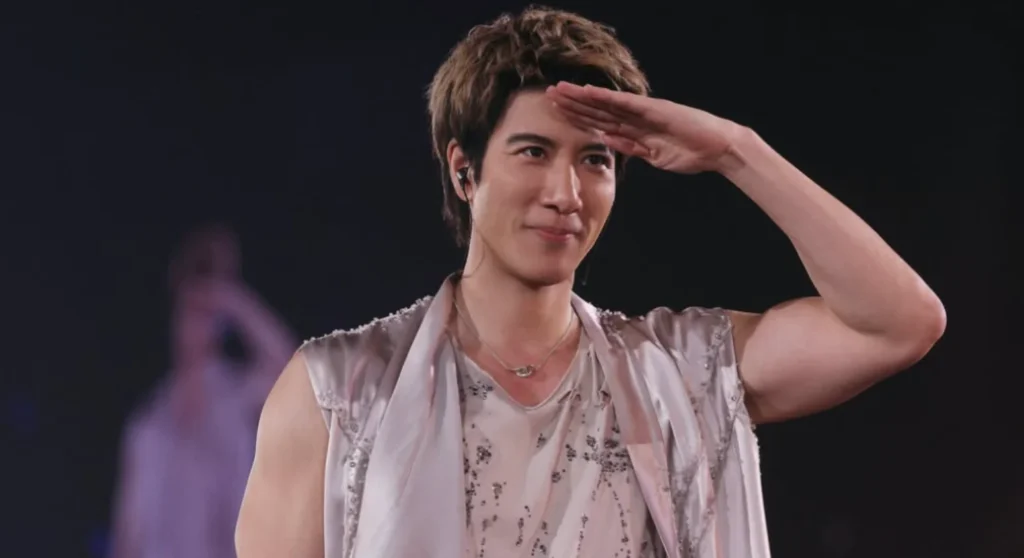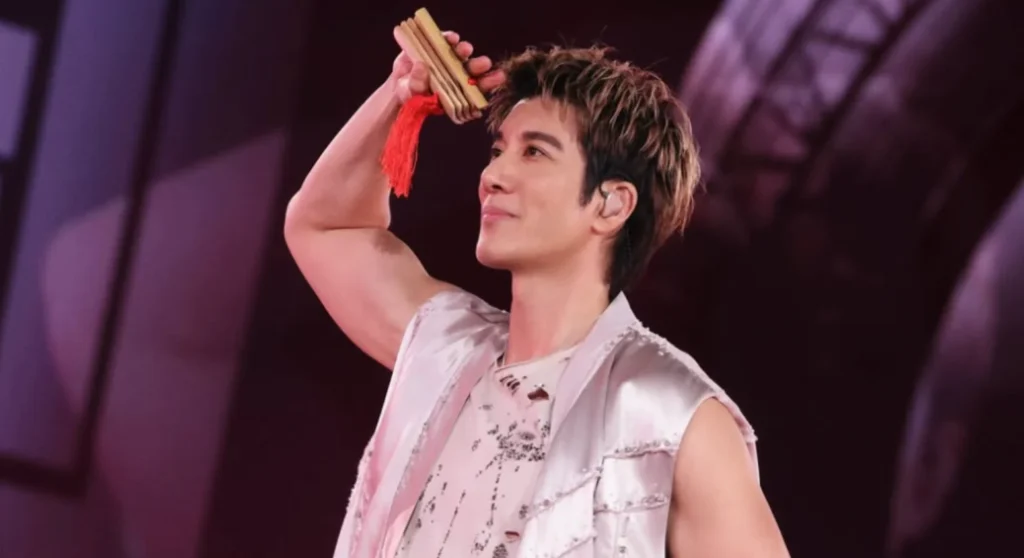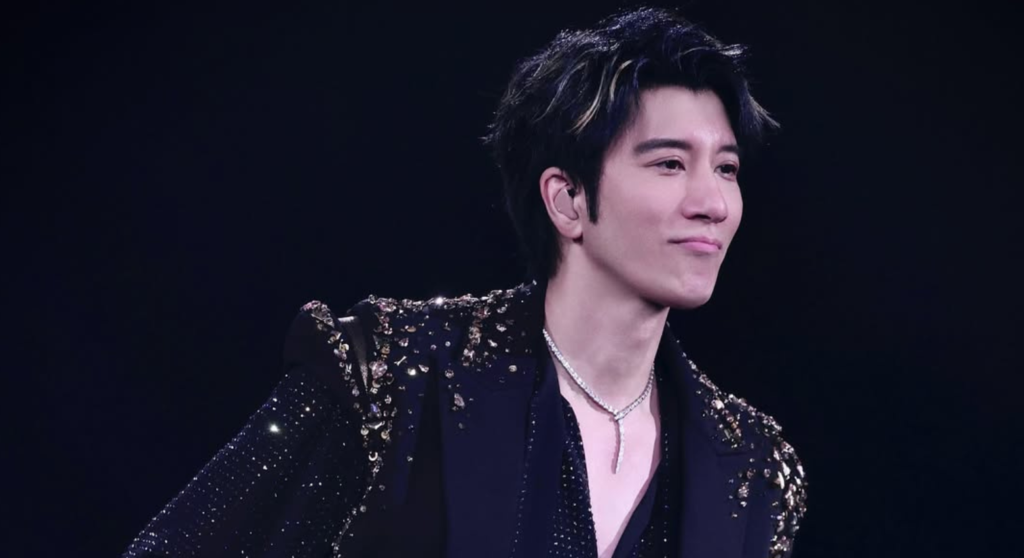

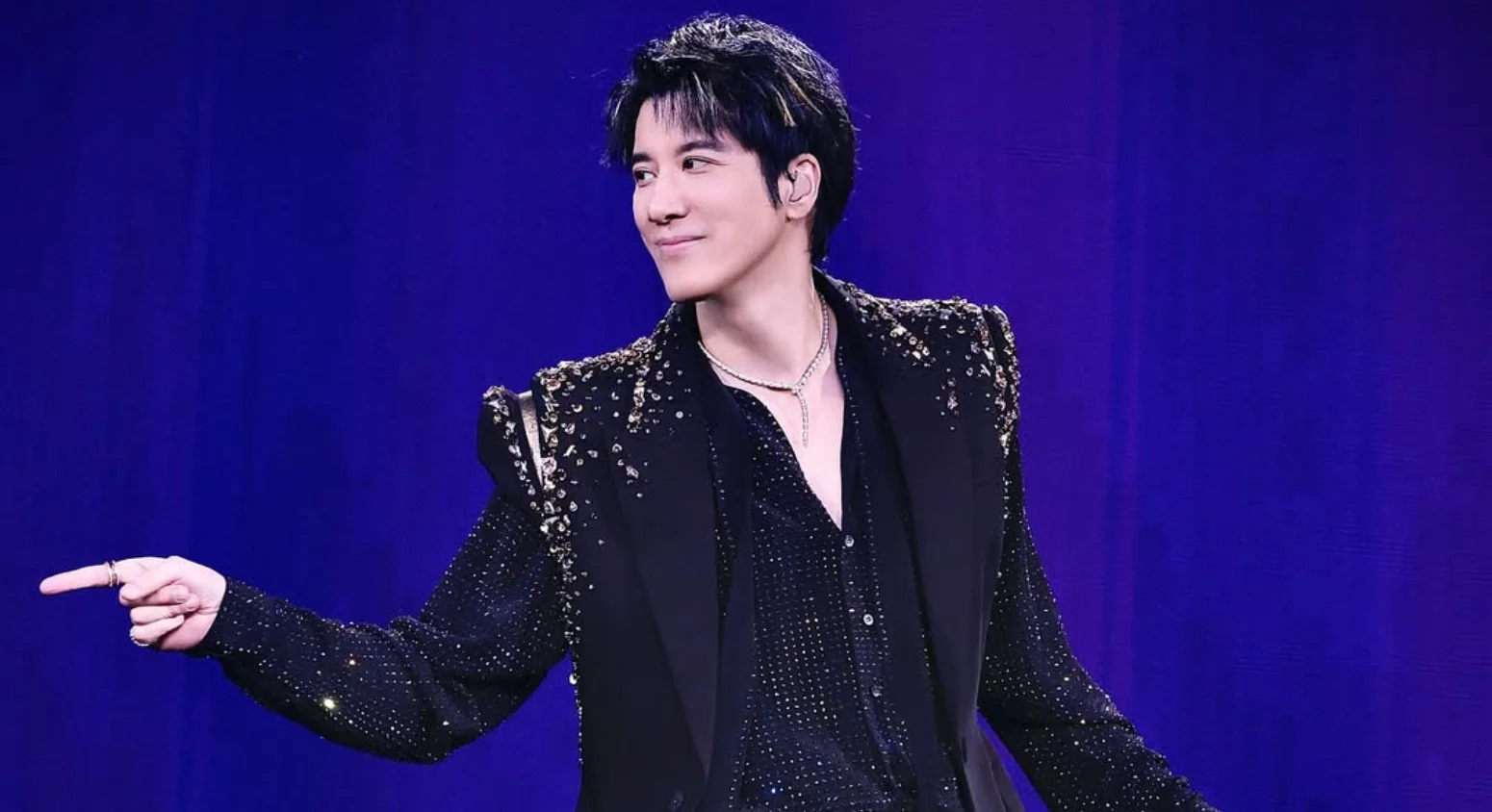
Wang Leehom’s Best Place Tour (2024–2026) was a 19-city, 57-show arena tour across China — every single show sold out. It featured robot dancers, a live drone light show, a live full band, orchestral string arrangements, and a setlist drawing from Wang’s 30-year catalog. It stands as the most technically ambitious and emotionally resonant tour of his career, and one of the biggest Chinese-language artist tours of the past decade.
Table of Contents
What Was Wang Leehom’s Best Place Tour?
Wang Leehom’s Best Place Tour (王力宏最好的地方巡回演唱会) was a major concert tour that ran from late 2024 through early 2026, covering 19 cities and 57 shows across mainland China. Every single performance sold out — many in under 60 seconds. It was, by any measure, the most successful touring cycle of Wang Leehom’s 30-year career.
The tour took its name from Wang’s 2024 single and accompanying philosophy: that wherever fans and the artist come together is ‘the best place.’ That idea — simple, warm, and deeply personal — shaped every element of the production, from the setlist construction to the stage design to the way Wang engaged with the crowd at each stop.
This article is the definitive record of what the Best Place Tour was, why it mattered, what happened on stage, and why it will be remembered as a landmark in Chinese pop concert history.
| Quick Fact: 19 cities. 57 shows. 100% sold out. The Best Place Tour’s Nanchang launch alone triggered a 330,000-fan pre-sale rush — a number that made national news in China and was covered as an economic event, not just an entertainment story. |
Who Is Wang Leehom?
Before diving into the tour itself, it helps to understand who Wang Leehom is — because the scale and character of The Best Place Tour only makes sense in the context of his 30-year career.
Wang Leehom (王力宏) is an American-born, Taiwan-based singer-songwriter, multi-instrumentalist, record producer, actor, and film director. Born November 17, 1976 in Rochester, New York, he is formally trained at three elite music institutions — Eastman School of Music, Williams College, and Berklee College of Music — giving him a compositional and technical depth rare in commercial pop.
| Fact | Detail |
| Full Name | Wang Leehom (王力宏) / Leehom Wang |
| Born | November 17, 1976 — Rochester, New York, USA |
| Based In | Taiwan |
| Education | Eastman School of Music, Williams College, Berklee College of Music |
| Music Genres | ‘Chinked-out’ — hip-hop / R&B fused with traditional Chinese music |
| Career Start | 1995 — 30+ year career |
| Albums Released | 25+ studio albums |
| Copies Sold | 60 million+ worldwide |
| Major Awards | 4x Golden Melody Award winner; 19x nominee |
| Social Following | 72 million+ combined followers across platforms |
| Defining Title | “King of Chinese Pop” (CNN, 2018) |
| Historic Concert | First solo pop artist to headline Beijing Bird’s Nest (90,000 seats, 2012) |
What Is ‘Chinked-Out’ Music? Wang Leehom’s Genre Explained
To understand why Wang Leehom’s concerts feel different from any other pop show, you have to understand the genre he invented: ‘chinked-out.’
Chinked-out is Wang Leehom’s own term for his signature musical style — a fusion of Western hip-hop rhythms, R&B chord progressions, and rap delivery with traditional Chinese instruments (erhu, pipa, guqin, dizi), pentatonic scales, and imagery drawn from Chinese history, poetry, and philosophy.
The genre is built on a core belief: that Chinese musical heritage is not an obstacle to making modern, globally competitive pop — it is a competitive advantage. It is what makes the music distinctive, emotionally layered, and culturally resonant across generations of Chinese-speaking listeners worldwide.
| Definition: ‘Chinked-out’ = Western hip-hop and R&B production + traditional Chinese instruments and cultural themes + Mandarin/English bilingual delivery. Wang Leehom coined the term. It is his equivalent of Jay Chou’s ‘Zhongguo Feng,’ though the two styles are distinct — Wang’s approach is more percussive and beat-forward, while Chou’s tends toward piano-led orchestral pop. |
At The Best Place Tour concerts, chinked-out came to life in the most literal way: live erhu and pipa players performed alongside the modern band, creating a sound that could shift in the same song from an 808 bass drop to a classical string passage. For fans, this is part of the emotional power of a Wang Leehom concert. You don’t just hear the music — you feel the cultural weight of it.
The Best Place Tour: City-by-City Overview
The Best Place Tour unfolded across 19 cities from late 2024 to early 2026. Each city was a multi-night event, and each venue was chosen for its technical capability to support the tour’s ambitious production requirements.
| City | Venue | Shows | Key Notes |
| Nanchang | Nanchang Yuzhang Sports Center | 3 | Tour launch; 330,000-fan pre-sale rush; national media coverage |
| Hefei | Hefei Shaoquan Sports Center Gymnasium | 3 | Strong fan demand; fast sell-out |
| Nanjing | Dream Blue Youth Olympic Sports Park Gymnasium | 4 | Dec 4–7, 2025; 4-night run — rare for arena tours |
| Chengdu | Dong’an Lake Sports Park Multifunctional Gymnasium | 3 | Dec 19–21, 2025; robot dancer debut; viral social moment |
| Zhuji | Zhuji Xishi Basketball Center | 3 | Jan 2–4, 2026; intimate venue scale vs. major cities |
| Foshan | International Sports Culture & Performing Arts Center | 2 | Jan 16–17, 2026; southern China leg |
| Sanya | Sanya Sports Center Bailu Gymnasium | 3 | Feb 6–8, 2026; scenic coastal city; final confirmed shows |
| + 12 more cities | Various major arenas | 36+ | Full tour expanded across China’s tier-1 and tier-2 cities |
The Best Place Tour Setlist: What Songs Did Wang Leehom Perform?
The setlist structure of The Best Place Tour was one of its most praised elements. Rather than a flat chronological presentation of hits, the show was built as a dramatic arc — starting with high energy, moving through emotional depth, and building to a climactic finale.
The structure followed a deliberate emotional journey:
| Show Segment | Mood / Energy | Song Types |
| Opening (Songs 1–4) | High energy, explosive | Biggest hits, crowd activation numbers, ‘chinked-out’ anthems |
| Mid-show act 1 (Songs 5–9) | Narrative, storytelling | Fan favourite ballads, career-spanning deep cuts, Mandarin/English mixes |
| Emotional centrepiece (Songs 10–13) | Intimate, vulnerable | Piano-led ballads, acoustic versions of classic songs, fan sing-alongs |
| Re-energise (Songs 14–17) | Upbeat, danceable | R&B tracks, collaboration medleys, live band showcase moments |
| Grand finale (Songs 18–22+) | Epic, cinematic | New singles including ‘The Best Place,’ career-defining anthems, encore |
Songs from across Wang’s 30-year catalog were performed, including material from his earliest albums (Love of My Life era, 1999) through to his most recent release. Notably, ‘Open Fire’ (开火) — his signature chinked-out anthem — became the tour’s most shared social media moment, with fan videos from multiple cities amassing millions of views on Douyin (TikTok China) and Weibo.
| Fan Insight: Multiple attendees noted that hearing ‘Kiss Goodbye’ (吻别 cover) performed live with the full string section was described as ‘the moment the whole crowd cried together.’ The emotional design of the setlist was widely acknowledged as one of the tour’s greatest strengths. |
Stage Design and Production: What Made This Tour Visually Remarkable
The Best Place Tour set a new benchmark for Chinese pop concert production. The visual and technical ambition of each show went substantially beyond anything Wang Leehom had attempted on previous tours, and beyond the standard for Chinese arena concerts of the period.
The LED Screen Architecture
The main stage featured a curved, multi-panel LED system spanning the full width of the performance area — significantly larger than standard arena setups. The screens displayed custom-animated visuals synchronized precisely to the live performance, shifting from cinematic landscapes during ballads to abstract geometric patterns during ‘chinked-out’ numbers. The visual language was designed in collaboration with Wang’s creative team to reflect the specific aesthetic of each era of his career.
Lighting Design
The lighting rig used a combination of moving spot lights, LED strip architectures integrated into the stage structure, and atmospheric haze systems. For emotional ballads, lighting pulled back to a single tight spot — creating intimacy at arena scale. For high-energy numbers, the full rig activated with stroboscopic sequences, color washes, and coordinated beam patterns that matched the musical rhythm precisely.
The Robot Dancer Sequence — Chengdu (December 2025)
The Chengdu shows (December 19–21, 2025) introduced the production element that became the tour’s most discussed and shared visual moment: a live robot dancer sequence during the ‘Open Fire’ set piece.
Four humanoid robots performed choreographed dance sequences alongside Wang Leehom on stage, their mechanical movements synchronized with the live band. The visual contrast — Wang’s natural, fluid stage presence alongside the precise mechanical choreography of the robots — created a striking artistic statement about the relationship between human creativity and technology. The sequence lasted approximately four minutes and was deliberately placed at the show’s energy peak.
Videos of the robot dancers were shared millions of times across Chinese social media within 24 hours of the first Chengdu show. Mainstream Chinese media covered it as a major cultural moment, not merely a concert novelty.
| Why It Mattered: The robot dancer sequence was not a gimmick — it was a considered artistic statement. Wang Leehom has long engaged publicly with questions about creativity, technology, and what is uniquely human about music. The robots on stage made that philosophical question visible. |
The Hangzhou Drone Light Show
The Hangzhou stop featured an outdoor drone light show integrated with the indoor concert — a production achievement that required coordinating between the venue interior and an outdoor airspace operation above it. Several hundred drones formed patterns above the venue: song titles, Wang Leehom’s silhouette, traditional Chinese imagery, and flowing abstract patterns synced to the music playing inside.
For fans standing in or around the venue, the effect was of the entire sky becoming part of the concert. Local media described it as ‘the most technically complex entertainment spectacle Hangzhou has seen in years.’ The drone show generated independent social media coverage completely separate from the concert itself, significantly expanding the tour’s reach beyond ticket-holders.
Stage Architecture and Fan Proximity
A catwalk stage extension reached into the floor standing area, allowing Wang Leehom to perform within meters of the crowd at multiple points throughout the show. This was a deliberate design choice consistent with the tour’s central theme: that ‘the best place’ is wherever fans and artist are closest. For floor-level attendees, the catwalk appearances became the most personal and emotionally intense moments of the night.
The Fan Experience: What Attending the Best Place Tour Actually Felt Like
Concert reviews from fans who attended multiple cities across the tour converged on consistent themes. Understanding what attending actually felt like is important context for why the tour’s sold-out status was so complete and consistent.
The Atmosphere Before the Show
Venues began filling 90 minutes before showtime at most stops. Wang Leehom’s fanbase spans age groups that few other Chinese pop artists can claim — fans who were teenagers at his 2002 concerts brought their adult children to the 2025 and 2026 shows. Pre-show atmosphere was described as a multi-generational reunion: family groups, couples who had attended Wang Leehom concerts together for two decades, fan club groups who had travelled from other provinces.
Wang Leehom’s Stage Presence and Fan Interaction
Wang Leehom’s stage presence at The Best Place Tour was widely described as the most relaxed and personally open of his career. At multiple stops, he paused between songs to talk to specific fans in the crowd, read signs, share personal reflections on songs and memories, and speak in both Mandarin and English. This was not scripted MC content — it was genuine, spontaneous conversation.
At the Nanjing shows (December 4–7), Wang spoke about the emotional significance of returning to perform in a city he had visited frequently since his early career. At Chengdu, he took an extended moment after the robot sequence to explain his thinking about technology, creativity, and what makes a live performance irreplaceable. These moments — unscripted, unhurried — were consistently identified by fans as the most memorable of the night.
The Collective Sing-Along Moments
The design of the setlist created specific moments where the entire arena sang together without Wang Leehom singing at all — he held the microphone out to the crowd and let tens of thousands of voices fill the space. This happened most powerfully during ‘Forever’s Eve’ (龙的传人 era material) and during the encore. Fan accounts described these moments as ‘overwhelming,’ ‘like nothing I’ve ever felt,’ and ‘the reason I keep going back.’
Why the Best Place Tour Mattered Culturally
The Best Place Tour was not just a successful commercial enterprise. It carried genuine cultural significance for Chinese-speaking audiences globally — and its impact extended well beyond the venues.
The Tourism and Economic Effect
The Nanchang pre-sale frenzy (330,000 fans competing for tickets) triggered what local media described as a ‘concert tourism boom’ — hotels sold out within hours of the tour announcement, local restaurants reported record revenue on show nights, and Nanchang’s tourism authority referenced the Wang Leehom concerts in its annual economic report. This pattern repeated in smaller cities like Zhuji, where the venue scale was more modest but the local economic impact was proportionally even larger.
A Multi-Generational Conversation
The Best Place Tour became a topic of conversation across Chinese family groups in a way that few cultural events achieve. Parents who had attended Wang Leehom concerts in the early 2000s attending with university-age children. Grandparents who knew the songs from television appearances sharing concert clips with grandchildren who discovered the music through streaming algorithms. The tour was covered in this context by multiple Chinese media outlets as a story about generational continuity and cultural heritage — not just as entertainment news.
Wang Leehom and the Technology Question
In a broader cultural moment defined by debates about AI-generated music and the future of human creativity, The Best Place Tour took an interesting position. The robot dancer sequence at Chengdu could have been read as technology replacing human performers — but in context, it was the opposite: Wang Leehom, a human artist with 30 years of craft and genuine musical training, sharing the stage with robots precisely to demonstrate what only he could do. The audience’s response — emotional, participatory, personal — made the argument visually.
The Best Place Tour in the Context of Wang Leehom’s Full Concert Career
| Year | Concert / Tour | Significance |
| 2008 | Beijing Olympics Closing Ceremony | Performed before a global TV audience of 1+ billion viewers |
| 2008 | Olympic Torch Bearer | Carried torch in Olympia, Greece — March 24, 2008 |
| 2012 | Bird’s Nest Solo Concert | First solo pop artist to headline 90,000-seat National Stadium, Beijing |
| 2016 | Love! Music Tour | Pan-Asian arena tour; career resurgence phase |
| 2018 | Descendants of the Dragon Tour | Cultural heritage-themed production; expanded to SE Asia |
| 2022 | Music Man World Tour | Return to live performing post-pandemic; first full tour in four years |
| 2024–2026 | The Best Place Tour | 19 cities, 57 shows, 100% sold out — career landmark; most ambitious production |
The Best Place Tour represents the apex of a career arc that has built consistently for three decades. What is notable is that it did not feel like a nostalgic retrospective — it felt like an artist at peak creative and commercial momentum. The production ambition, the new material, the social media virality of the robot and drone moments — all of these positioned Wang Leehom not as a heritage act revisiting past glories, but as a current, vital, evolving artist.
What Comes Next for Wang Leehom After The Best Place Tour?
The Best Place Tour concluded in early 2026. Since then, Wang Leehom has continued his broader creative output on multiple fronts:
- New music: The single ‘I’m Alive’ (2025) signalled a new creative chapter — exploring themes of resilience and renewal. The musical direction is a natural evolution of chinked-out, integrating contemporary electronic production with Wang’s classical Chinese instrumentation approach.
- Universal Music Group affiliation: Wang’s distribution partnership with UMG means his catalog and future releases have global infrastructure behind them — potentially expanding his reach into European and North American streaming markets in a more structured way than before.
- Film and directing: Wang Leehom has indicated ongoing interest in directing projects that integrate his musical vision with cinematic storytelling — a direction consistent with his 2010 directorial debut Love in Disguise.
- Future touring: With The Best Place Tour having set a new commercial and production benchmark, fan and industry expectation for the next tour cycle is substantial. Whether the next tour is China-focused or attempts a broader international circuit remains to be seen.
| For fans who discovered Wang Leehom through The Best Place Tour and want to understand the full arc of his music: start with ‘Heroes of Earth’ (2000) for early chinked-out, ‘Shangri-La’ (2004) for his cultural peak, ‘Change Me’ (2011) for his mature period, and ‘Greatest Works of Art’ collaborations for his most recent full-band live sound context. |
Wang Leehom vs. Other Mandopop Concert Artists: How the Best Place Tour Compares
| Artist | Recent Major Tour | Shows / Cities | Production Signature |
| Wang Leehom | Best Place Tour (2024–2026) | 57 shows / 19 cities (all sold out) | Robot dancers, drone show, live chinked-out band |
| Jay Chou | Greatest Works of Art Tour (2022–2024) | Global; multiple continents | Cinematic staging, fireworks, elaborate narrative arcs |
| JJ Lin | Lin-Manuel Miranda Tour (2023) | Pan-Asian arenas | High vocal showcase, emotional intimacy focus |
| Jolin Tsai | Ugly Beauty Tour (2019–2023) | Asia + North America | Theatrical, gender-fluid visual storytelling |
| G.E.M. | Revelation World Tour (2023) | Asia + select Western cities | High-energy dance, fashion-forward production |
Conclusion: What the Best Place Tour Tells Us About Wang Leehom
The Best Place Tour was 57 data points that proved the same thing: Wang Leehom, 30 years into his career, is not coasting. Every sold-out show, every viral production moment, every fan who travelled across China for a second or third night, every arena that erupted at the opening chord of ‘Open Fire’ — all of it represents something more significant than a successful concert run.
It represents the compound return on three decades of creative integrity. Wang Leehom did not become the King of Chinese Pop by following trends. He became it by inventing a genre, mastering multiple instruments, bringing genuine compositional craft to mainstream pop, and treating his audience — consistently, across every era — with the respect that you earn only through showing up for 30 years.
The Best Place Tour is the record of what that looks like at its best. Fifty-seven shows. Nineteen cities. Not a single empty seat.
Frequently Asked Questions
What was Wang Leehom’s Best Place Tour?
Wang Leehom’s Best Place Tour was a 19-city, 57-show arena concert tour across China running from 2024 to early 2026. Every show sold out. The tour featured robot dancers, a drone light show, live traditional Chinese instruments alongside a modern band, and a setlist spanning Wang’s entire 30-year career. It is regarded as the most commercially successful and technically ambitious tour of his career.
How many shows did the Best Place Tour have?
The Best Place Tour consisted of 57 shows across 19 cities in mainland China. Every single show sold out, making it one of the most comprehensively sold-out Chinese-language artist tours in modern concert history. The Nanchang tour launch alone triggered a 330,000-person pre-sale rush.
What cities did the Best Place Tour visit?
Confirmed cities included Nanchang (tour launch), Hefei, Nanjing, Chengdu, Zhuji, Foshan, Sanya, and 12 additional cities. The tour covered both tier-1 major cities and tier-2 regional centres, deliberately expanding Wang’s live reach beyond the markets where Chinese pop tours typically concentrate.
What made the Best Place Tour different from other Wang Leehom tours?
Three elements made The Best Place Tour distinctive: (1) the robot dancer sequence at Chengdu — humanoid robots performing choreography live on stage alongside Wang — which became a viral cultural moment; (2) the Hangzhou drone light show integrating outdoor drone performance with the indoor concert; (3) the scale — 57 shows and 19 cities is significantly larger than any previous Wang Leehom touring cycle.
What is the meaning of ‘The Best Place’ tour name?
‘The Best Place’ comes from Wang Leehom’s 2024 single of the same name and the philosophy behind it: that wherever fans and artist gather together — regardless of city, venue, or country — that becomes ‘the best place.’ It frames the tour as a relational experience rather than a spectacle. The name reflects Wang’s stated priority of connection over production in his approach to live performance.
What songs did Wang Leehom perform on the Best Place Tour?
The setlist drew from Wang’s full 30-year catalog, spanning material from his early career albums through to his 2024 release. Signature songs including ‘Open Fire’ (开火), ‘Change Me,’ ‘Forever’s Eve,’ and new material featured prominently. The show structure was designed as an emotional arc rather than a chronological presentation, moving between high-energy chinked-out numbers and intimate ballads.
What happened at the Chengdu Best Place Tour concerts?
The Chengdu shows (December 19–21, 2025) introduced the most-discussed production element of the tour: a live robot dancer sequence during ‘Open Fire.’ Four humanoid robots performed synchronized choreography alongside Wang Leehom on stage. Videos went viral across Chinese social media within hours, reaching millions of views. The sequence was widely interpreted as an artistic statement about human creativity and technology.
Is Wang Leehom planning another tour after the Best Place Tour?
As of early 2026, Wang Leehom has not announced a formal successor to The Best Place Tour. However, his new single ‘I’m Alive’ (2025) and his ongoing distribution partnership with Universal Music Group signal continued creative and commercial activity. Industry observers widely expect a new touring cycle, potentially with an expanded international footprint, in 2026–2027.