

Have you ever heard a sound so full of feeling it gave you chills? That’s the magic of the Erhu—a beautiful traditional Chinese instrument known for its rich, emotional sound. With just two strings and a bow, this simple yet powerful instrument can express everything from deep sadness to pure joy.
Often called the “Chinese violin,” the Erhu instrument has been part of China’s music and culture for hundreds of years. Its voice is soft and haunting, like someone singing from the heart. Whether you’ve heard it in a movie, at a concert, or on the street, the Erhu has a way of pulling you in.
But what makes the Erhu so special? Why does it sound so different from other instruments? And how has it stayed popular through all these years?
In this blog, we’ll explore the story of the Erhu—where it came from, how it’s made, and why people around the world are still falling in love with its sound. Whether you’re new to Chinese music or just curious about new instruments, there’s something here for you. Let’s dive in.
Table of Contents
1. The Heritage of the Erhu
The Erhu is more than just a musical instrument—it’s a piece of history that has been passed down through generations. Known as a traditional Chinese instrument, the Erhu has been around for over a thousand years, and its sound still touches people’s hearts today.
Where It All Began
The Erhu first appeared in China during ancient times, possibly as early as the Tang Dynasty. It started as a folk instrument played by nomadic groups in the north and slowly became part of Chinese culture. Over time, it found its way into operas, storytelling, and everyday music.
Why the Erhu Is So Special
What makes the Erhu instrument stand out is how it connects people to Chinese traditions and emotions. It’s often used in traditional music, but its voice is so powerful that it fits just as well in modern songs and movie soundtracks.
Here’s why the Erhu is still loved today:
- It tells a story: The Erhu sounds almost like a person singing. It can express sadness, joy, or longing without using any words.
- It’s part of Chinese identity: You’ll find it in festivals, concerts, and even international performances.
- It keeps tradition alive: Even in today’s fast-changing world, people still learn and play the Erhu to keep its history going.
A Sound That Stays With You
Have you ever heard a song that made you stop and really feel something? That’s the power of the Erhu. Its sound is soft but emotional—once you hear it, you won’t forget it.
The Erhu isn’t just an old Chinese instrument sitting in a museum. It’s alive, still being played, shared, and loved by musicians of all ages. And as we keep learning about it, we’re also keeping its story going.
2. Anatomy and Sound: What Makes the Erhu Unique
At first glance, the Erhu instrument might seem simple—just two strings, a small wooden body, and a bow stuck between the strings. But don’t let its appearance fool you. This humble-looking traditional Chinese instrument is full of surprises.
Small Design, Big Sound
The Erhu is made from a few key parts that work together to create its beautiful, emotional sound:
- Sound box: This is the round body at the bottom, usually made of wood and covered with snakeskin. It’s what helps the Erhu sound warm and deep.
- Neck: A long stick that the strings are stretched over. There are no frets, so players use their fingers to press the strings and slide between notes.
- Strings: The Erhu has only two strings, but they can create a wide range of sounds.
- Bow: Made of wood and horsehair, the bow is placed between the strings and stays there—it doesn’t come off like a violin bow.
Each part might look basic, but together they give the Erhu its one-of-a-kind voice.
The Voice of the Erhu
Even with just two strings, the Erhu can express so much. It can sound happy, sad, peaceful, or dramatic—sometimes all in one song. People often say the Erhu “cries,” and once you hear it, you’ll understand why.
Here’s what makes the Erhu sound so special:
- Sliding notes: Players can move smoothly from one note to another, making it sound like someone is singing.
- Vibrato: By shaking their fingers, players add emotion to the sound, almost like the instrument is speaking.
- No fingerboard: Because there are no frets, players can control the pitch and tone with small, careful movements.
These small details are what give the Erhu its soul.
Simple but Powerful
The Erhu might not be big or flashy, but it doesn’t need to be. Its design lets the player focus on feeling and expression. Every note can tell a story, and every song can touch the heart.
So, even though it’s just a two-stringed Chinese instrument, the Erhu proves that sometimes, the simplest things can create the most powerful emotions.
Discover: How Guqin Music Influenced Chinese Culture and Philosophy
3. Playing the Erhu: Skill, Emotion, and Technique
Have you ever watched someone play the Erhu and wondered how they get such a moving sound from just two strings? The answer isn’t just about technique—it’s about feeling. Playing the Erhu is as much about emotion as it is about skill. It doesn’t just make music; it tells a story.
Learning this Chinese instrument takes patience, but it’s also incredibly rewarding. Whether you want to perform or just play for yourself, the Erhu has a way of drawing you in.
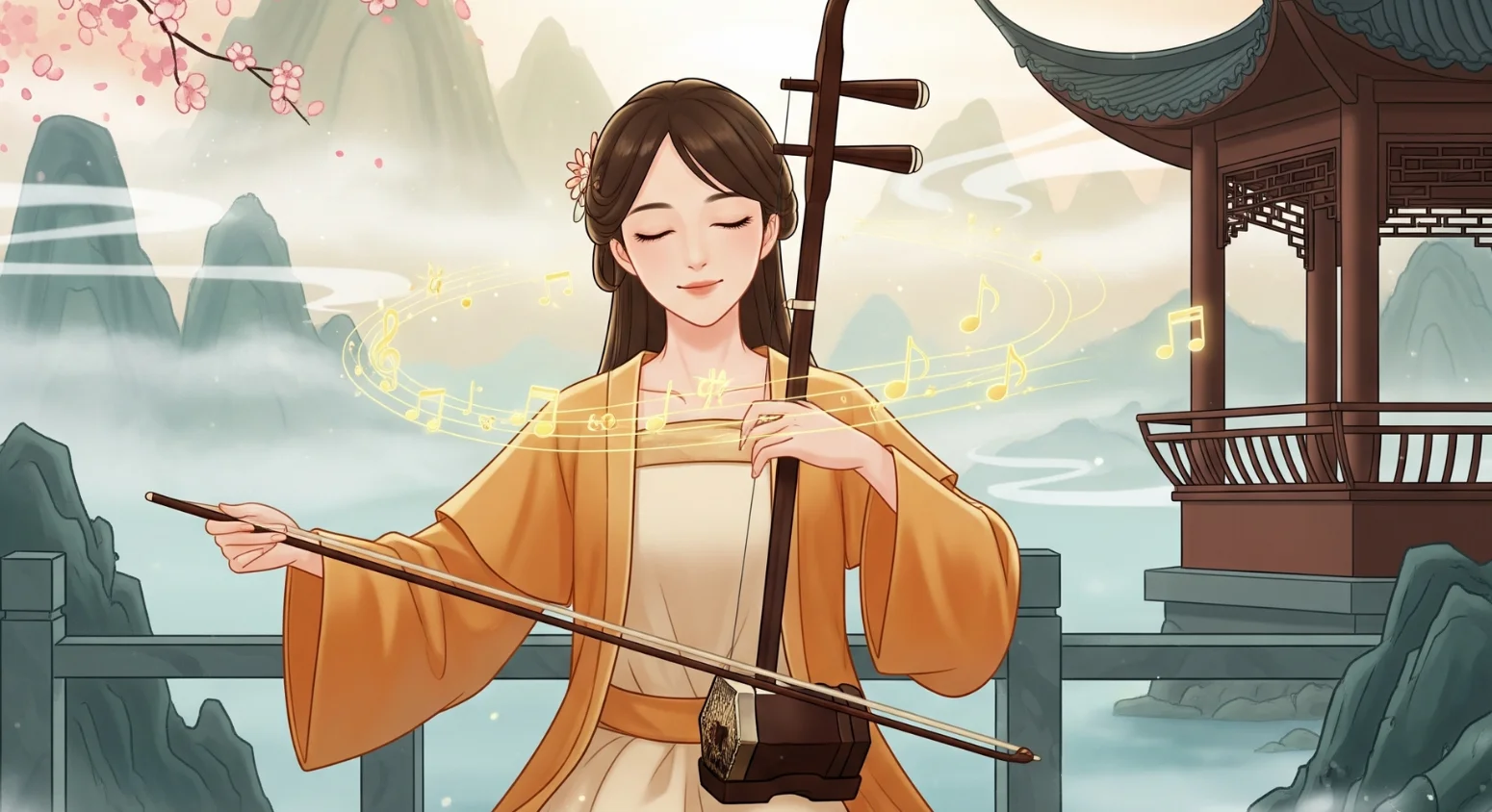
To start, you need to learn the basics. Players usually sit down with the Erhu resting on their left leg. The left hand presses the strings, while the right hand moves the bow, which is held between the two strings. Unlike a violin, the bow never leaves the strings—it stays in place and moves in both directions to play.
Find Out: Exploring the Beauty of Chinese Opera Music
How the Erhu Creates Emotion
The two strings are tuned five notes apart, and there’s no fingerboard like on other string instruments. That means your fingers don’t press down on wood; they press in the air, giving the Erhu its smooth, sliding sound. At first, this can feel tricky, but with practice, it becomes second nature.
Once you’re comfortable holding and tuning the Erhu, the real magic begins. The Erhu is often called “the instrument that speaks,” because it sounds a lot like a human voice. With small movements of your fingers and bow, you can make the Erhu cry, sigh, or sing. Even simple songs feel full of emotion.
Common Challenges for Beginners
New players often struggle with:
- Playing notes in tune
- Moving the bow smoothly
- Making a clear, strong sound
That’s normal. The key is to practice regularly and listen closely. Watching videos, recording yourself, and playing along with recordings can help a lot.
Tips for Learning the Erhu
If you’re thinking about learning the Erhu instrument, here are a few tips:
- Choose a good beginner Erhu—not the cheapest one, but one that’s built well
- Take your time learning basic bow and finger techniques
- Practice a little each day instead of once in a while for a long time
- Listen to skilled players and try to copy their sound and feeling
Why It’s Worth Learning
Learning to play the Erhu isn’t always easy, but it’s worth it. It connects you to a long musical tradition and lets you express yourself in a way that few other instruments can. Every note you play is a chance to share a feeling, a moment, or a memory. And that’s what makes the Erhu truly special.
Explore: Wang Leehom’s Musical Instruments: Exploring the Tools Behind His Iconic Sound
4. The Erhu in Modern Times: Tradition Meets Innovation
Have you ever thought about how an old instrument like the Erhu fits into today’s world? Even though it’s been around for hundreds of years, the Erhu is still being used in many new and exciting ways.
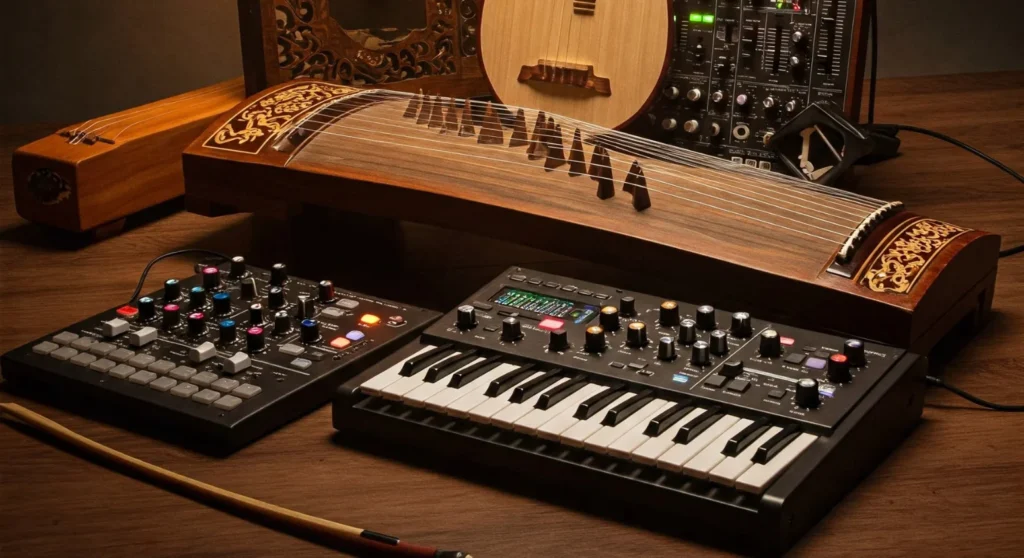
This beautiful traditional Chinese instrument is no longer just for old songs or classical music. People are now playing it in modern music, movies, games, and even online videos.
Where You Hear the Erhu Today
You might be surprised to hear the Erhu in places you didn’t expect:
- In movie music, where it adds emotion to sad or peaceful scenes
- In pop and rock songs, mixed with other instruments for a new sound
- In video games, helping tell stories through music
- In online videos, where young players perform modern songs with the Erhu
The Chinese Erhu has become popular again because of how it can sound both old and new at the same time.
How People Are Using the Erhu in New Ways
Musicians today are doing more than just playing old songs. They are getting creative:
- Using technology to change the sound or add effects
- Mixing Erhu music with styles like jazz, electronic, or hip-hop
- Writing brand-new songs just for the Erhu
- Sharing videos on YouTube, TikTok, and other apps to reach more people
These new ways are helping the Erhu connect with younger audiences around the world.
Why the Erhu Still Matters Today
Even with all the new instruments and music styles today, the Erhu instrument still has something special:
- It shows real feeling, like joy, sadness, or peace
- It shares Chinese culture and tradition with others
- It sounds different from most instruments, which makes it stand out
The Future of the Erhu
The Erhu is not being forgotten. It’s growing and changing. More musicians are learning it, playing it in new ways, and sharing its sound with the world.
So next time you hear a soft, emotional melody, it might just be the Erhu—an old instrument with a fresh new voice.
Also Read: Folk Music of China: A Deep Dive into Regional Melodies
Conclusion: The Erhu’s Voice Still Speaks
The Erhu may be an old instrument, but its sound is still full of life. Whether it’s playing in a quiet, traditional song or in a modern movie, the Erhu has a special way of touching people’s hearts. You don’t need to know much about music or Chinese culture to enjoy it—just listening is enough.
If you’re curious about the Erhu instrument, now is a great time to learn more. You can listen to it, watch people play it online, or even try learning it yourself. This traditional Chinese instrument shows that old things can still be powerful and meaningful today.
In a noisy world, the Erhu gives us something soft, emotional, and honest. That’s why many people call it “the instrument with a soul.” Once you hear it, you’ll understand why it’s still loved after so many years.
Maybe it’s time to let the Erhu’s voice speak to you, too.
Frequently Asked Questions
1. Is the Erhu hard to learn?
It can take time to learn, but beginners can start playing simple songs after a few lessons. With practice, it gets easier.
2. What kind of music can the Erhu play?
The Erhu can play many kinds of music—traditional Chinese songs, pop music, movie music, and more.
3. How is the Erhu different from a violin?
The Erhu has only two strings and no fingerboard. The bow goes between the strings. Its sound is softer and more like a human voice than a violin.
4. Where can I buy a beginner Erhu?
You can find beginner Erhus online. Look for one made from real wood with good reviews. If possible, ask a teacher or someone with experience for advice.