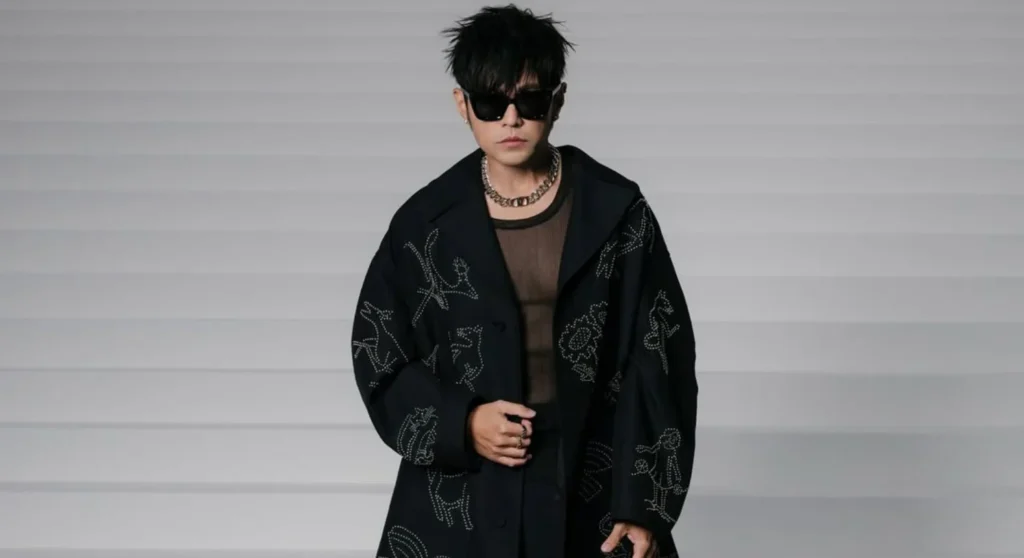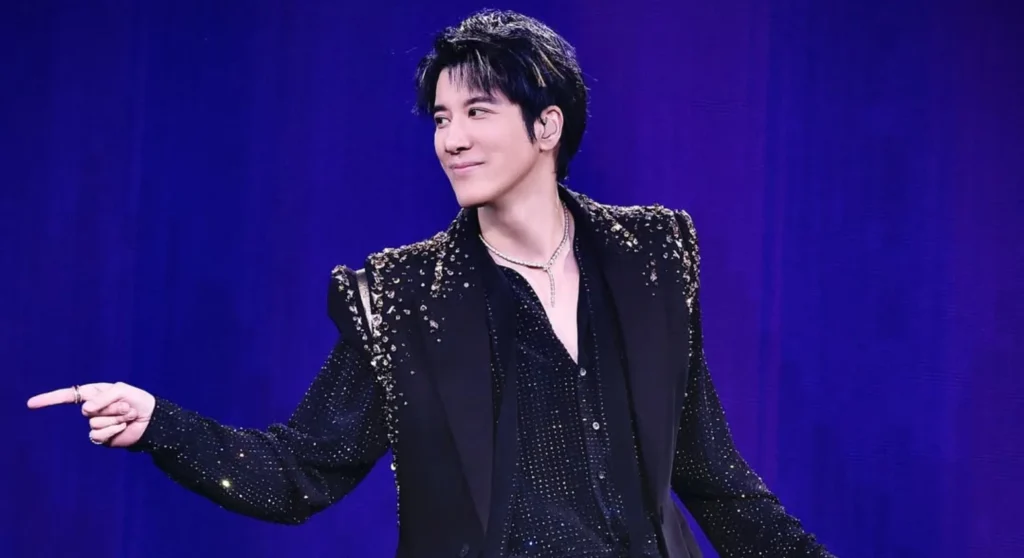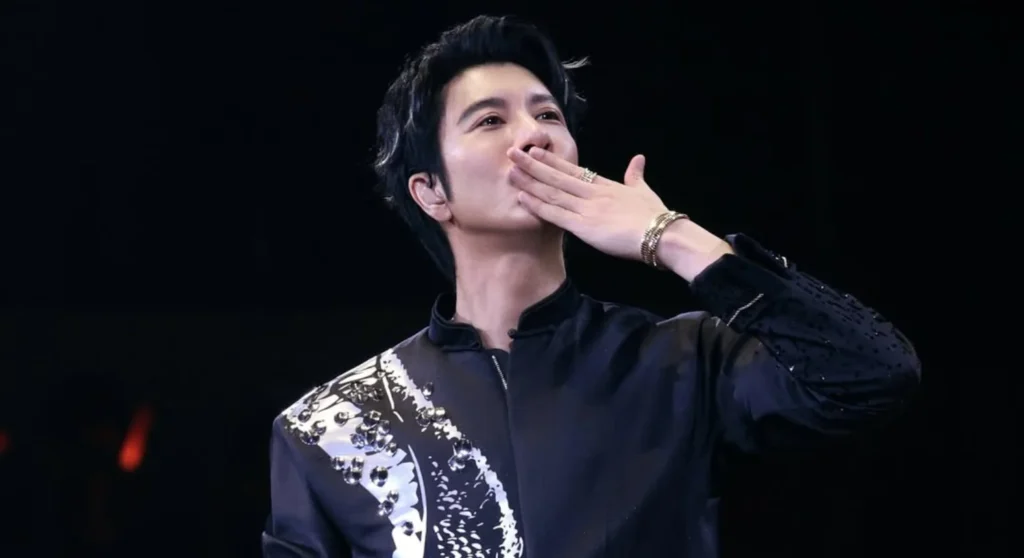
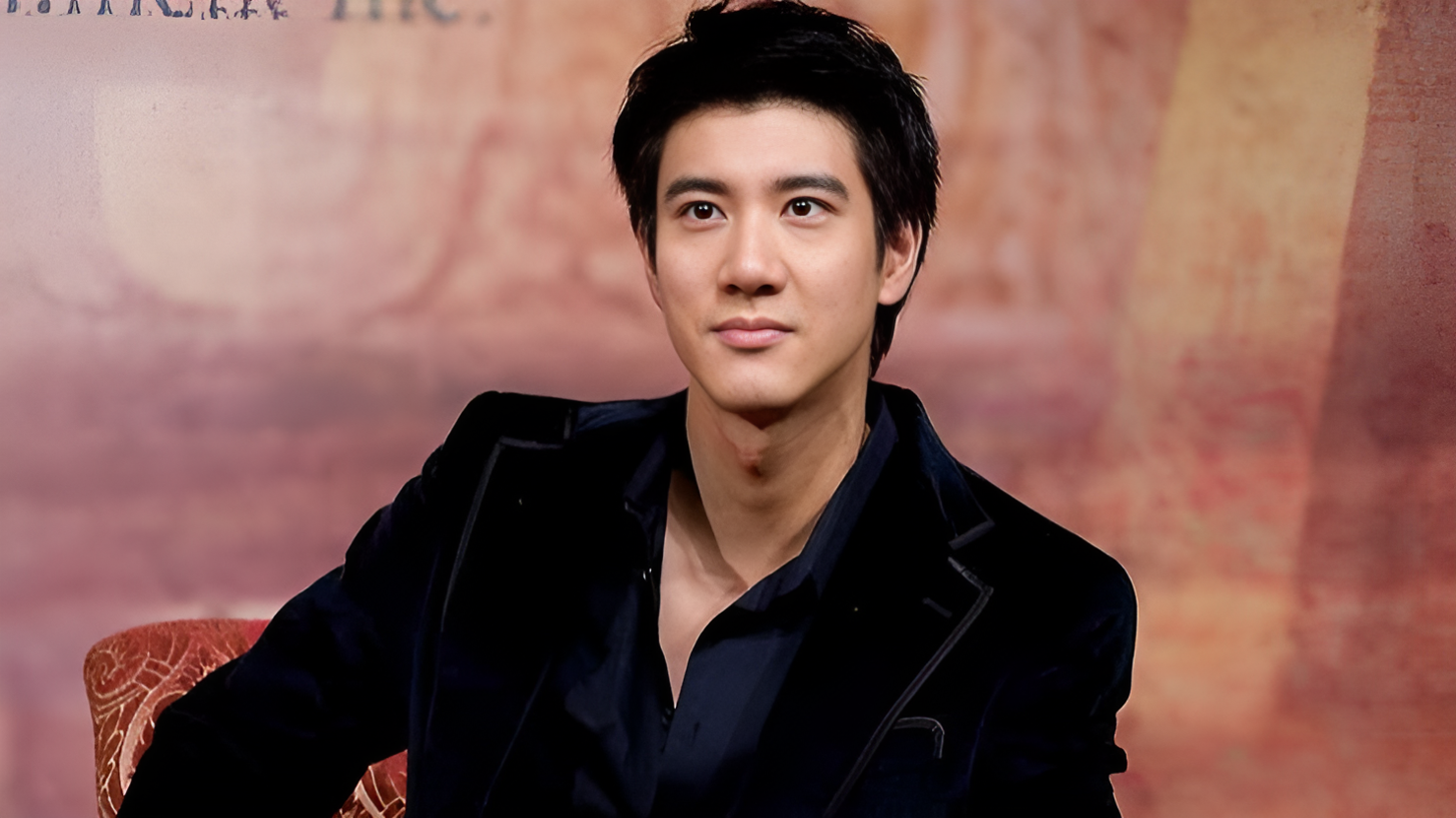
If you follow Wang Leehom on Instagram, Weibo, YouTube, or X, you may have noticed something different. The name “Wang Leehom” is gone. In its place: simply Leehom.
No announcement. No fanfare. Just one clean, confident name update across every major platform.
For casual observers, it might seem like a minor social media housekeeping move. But for anyone who has followed the artist’s three-decade career — the musical groundbreaking, the cultural bridge-building, the highs and the controversies — this rebrand carries real meaning. And it raises an important question:
Why did Wang Leehom drop his surname? What does the rebrand to “Leehom” actually signal — and what does it mean for his music, his career, and his relationship with fans?
At ChinaMusicSphere, we’ve been covering Chinese and Mandopop artists for years. This is our deep-dive into the Wang Leehom name change — the reasons behind it, what it means culturally, and why it makes complete sense for where Leehom is headed in 2026 and beyond.
First, Let’s Understand What “Leehom” Even Means as a Name
Wang Leehom was born on May 17, 1976, in Rochester, New York, to Chinese immigrant parents. His Chinese name, 王力宏 (Wáng Lìhóng), loosely translates to “great and magnificent” — a name that carries weight in Mandarin-speaking cultures. “Leehom” is the romanized rendering of 力宏 (Lìhóng), his given name.
By dropping “Wang” — the surname — the artist isn’t erasing his Chinese heritage. He’s doing something subtler and smarter: he’s foregrounding the part of his name that is uniquely his. “Wang” is one of the most common Chinese surnames in the world — shared by hundreds of millions of people. “Leehom”, by contrast, is entirely distinctive. There is no other globally recognized artist called Leehom.
That singularity is the entire point.
Reason 1: The Power of the One-Name Identity in Global Pop
Let’s talk about what industry professionals call a mononym — a single-name identity used by a celebrity in place of their full name. The most iconic examples in global music history:
• Madonna — born Madonna Louise Ciccone
• Adele — born Adele Laurie Blue Adkins
• Beyoncé — born Beyoncé Giselle Knowles-Carter
• Prince — born Prince Rogers Nelson
• G-Dragon — born Kwon Ji-yong (K-pop’s most recognized mononym)
Each of these artists made a conscious decision — or had one made for them by branding teams — to strip back their identity to a single word. And in every case, it worked. The mononym became the brand. The brand became iconic.
For Leehom, the logic is identical. “Wang Leehom” requires two words, carries the cognitive weight of a full name, and is heavily associated with a specific period and geography — Taiwan and mainland China’s early 2000s pop landscape. “Leehom” is timeless. It can belong to any era, any genre, any market.
In short: the rebrand is a play for longevity and global relevance — not just regional recognition.
Reason 2: A Fresh Start After a Difficult Chapter
It’s impossible to talk about this rebrand without acknowledging what the past few years have meant for Wang Leehom personally and professionally. The public scrutiny he faced between 2021 and 2023 was intense, and it affected his visibility in the Chinese entertainment market substantially.
Rebranding — changing your name, your visual identity, your platform presence — is one of the most classic tools in a public figure’s arsenal when they want to signal a break from the past. It tells the audience: this is a new chapter. Judge me on what comes next.
The 2025 single I’M ALIVE was the first major signal that Leehom was ready to re-enter the spotlight. The name change across social media is the second — and arguably louder — signal. Together, they form a coherent comeback narrative: a man who has been through something, come out the other side, and is ready to reclaim his art.
“I’M ALIVE” wasn’t just a song title. It was a statement. And “Leehom” — dropping the family name, standing alone — is the visual, permanent version of that same statement.
This is a pattern seen across entertainment history. Artists who go through public turbulence and come out stronger often mark the shift with a deliberate identity change — it gives both the artist and the audience a clear line between then and now.
Reason 3: Cross-Market Accessibility — East Meets West, Simplified
Leehom has always occupied a unique position in the Chinese music industry: he is Chinese-American, raised in the United States, classically trained at Williams College and Berklee College of Music, fluent in English and Mandarin, and deeply versed in both Western and Eastern musical traditions.
That duality has always been his greatest artistic strength — the engine behind genre-defining work like his Chinked-Out and ChiRock movements, which fused traditional Chinese instrumentation with hip-hop, R&B, and rock. But it also created a naming challenge: “Wang Leehom” reads as unmistakably Chinese to Western ears, potentially creating an invisible ceiling for non-Asian audience discovery.
“Leehom” solves this elegantly. It is phonetically simple for English speakers. It is searchable, memorable, and platform-friendly. It does not require translation. And critically — it does not signal “foreign” to Western audiences in the way a full Chinese name might in certain discovery contexts (streaming algorithm recommendations, editorial playlists, social discovery feeds).
For an artist who has always wanted to be a true global artist — not just a C-pop export — this is a meaningful structural change.
Reason 4: Digital Branding & SEO in the Streaming Era
Here’s a dimension of this rebrand that rarely gets discussed publicly but matters enormously in 2026: digital discoverability.
When a new listener on Spotify, Apple Music, YouTube, or KKBOX encounters the name “Leehom” — particularly one who already knows of the artist — the single-name format is instantly clean and unambiguous. There is no confusion about which “Wang” this refers to, no competing results, no disambiguation page required.
From a pure search engine optimization standpoint:
• “Leehom” has extremely low keyword competition — no other major public figure uses it
• The name creates a branded keyword cluster that is 100% ownable
• Cross-platform consistency (same name on Instagram, YouTube, Weibo, Spotify) boosts entity recognition in Google’s Knowledge Graph
• A unified social handle is significantly easier to surface in algorithmic content recommendations
Whether the team behind Leehom approached this as a deliberate SEO and digital brand strategy or whether it emerged organically from a desire for simplicity — the effect is the same. “Leehom” is now one of the most search-clean artist names in the Chinese music space.
Reason 5: The Timing — Why 2026 Is the Right Moment
Timing in celebrity rebranding is everything. Do it too early and the audience doesn’t have enough emotional investment in the name you’re leaving behind. Do it too late and it looks like desperation rather than evolution.
For Leehom, 2026 hits a near-perfect window. Here’s why:
I’M ALIVE (2025) — The 2025 single functioned as a soft reintroduction. It reminded the audience of his artistry, racked up streams on Spotify and Apple Music, and began rebuilding media coverage. The rebrand follows with momentum already established.
2026 Tour — Confirmed tour dates mean Leehom is re-entering public spaces. Concertgoers, ticketing sites, venue listings, and media coverage will all carry the new name — giving the rebrand massive organic amplification.
Post-controversy distance — Enough time has passed since the most intense period of public scrutiny that a name change now reads as evolution, not escape.
All three factors converge in 2026 to make this the ideal moment for the rebrand to land cleanly, credibly, and with the maximum positive signal to the market.
What Fans Are Saying About the Leehom Rebrand
Fan response to the Leehom name change has been largely positive — particularly among long-time international followers. On platforms like Instagram and X, discussions around #Leehom and #WangLeehom reveal a fan base that feels the rebrand is earned rather than forced.
Many fans point out that they already called him “Leehom” informally — the rebrand simply makes official what felt natural. Others see it as a symbolic act of self-ownership: a decision by the artist to define his own identity on his own terms, without the weight of a surname that connects him to a family history that became part of his public controversy.
On Chinese platforms like Weibo and Xiaohongshu, the reaction has been more nuanced — some fans express nostalgia for “Wang Leehom” as the name they grew up with, while younger audiences and newer followers seem to embrace “Leehom” as a fresh identity they can attach to without the baggage of the controversies.
The split reaction is itself instructive: it shows that the rebrand is doing exactly what it’s supposed to do — creating a new entry point for new audiences while giving existing fans a marker of transition.
How Does This Compare to Other C-pop & Asian Music Rebrands?
The Asian music landscape has seen several memorable rebrands over the years. Here’s how Leehom’s move compares:
G-Dragon (K-pop, YG Entertainment) — Kwon Ji-yong building an entirely separate artistic persona under the G-Dragon moniker is perhaps the closest parallel in Asian pop. The mononym allowed him to have a distinct brand from BIGBANG while retaining personal artistic ownership.
Jay Chou — Interestingly, Jay Chou has consistently used his full name globally but has a mononym-equivalent in English contexts simply as “Jay” — used widely in SEA fan communities. A different approach to the same accessibility problem.
BoA (SM Entertainment) — Kwon Boa adopted the single-name “BoA” early in her career specifically to target Japanese and Western markets — and it worked, making her one of the first Korean artists to chart in Japan and beyond.
What makes Leehom’s rebrand distinctive is that it’s happening mid-career, after three decades of operating under a full name. That takes a level of artistic confidence — and strategic clarity — that not every artist is willing to commit to.
What the “Leehom” Era Could Mean for His Music
The most exciting question for fans isn’t the name itself — it’s what the name represents musically. Every major rebrand in music history has been followed by a creative shift. The question is: what direction does Leehom the artist take that Wang Leehom might not have?
Based on the trajectory of I’M ALIVE and the confirmed 2026 tour, a few directions seem plausible:
• A bilingual album targeting both English and Mandarin-speaking markets simultaneously
• Collaborations with Western artists — a natural fit for an artist now operating under a global-ready name
• A continued evolution of the Chinked-Out fusion sound into more contemporary sonic territory
• Live performance-focused releases designed for the 2026 tour rollout
Whatever the direction, the rebrand has given Leehom something invaluable: a clean slate and a unified identity to release it under.
Final Thought: “Leehom” Is Not a Departure — It’s a Declaration
When Wang Leehom quietly updated his name to Leehom across every platform, he wasn’t running away from his past. He was editing his story — keeping the part that’s uniquely his and releasing the rest.
It is a move that is simultaneously strategic and personal. Strategic because a single-name moniker gives him cleaner global positioning, stronger digital brand equity, and the kind of iconographic simplicity that transcends language barriers. Personal because it is, at its core, a man deciding what he wants to be called — and choosing the name that belongs entirely to him.
In the world of Chinese music — where legacy, name, and family identity carry enormous cultural weight — choosing to go by a single given name is no small act. It is a statement of artistic autonomy.