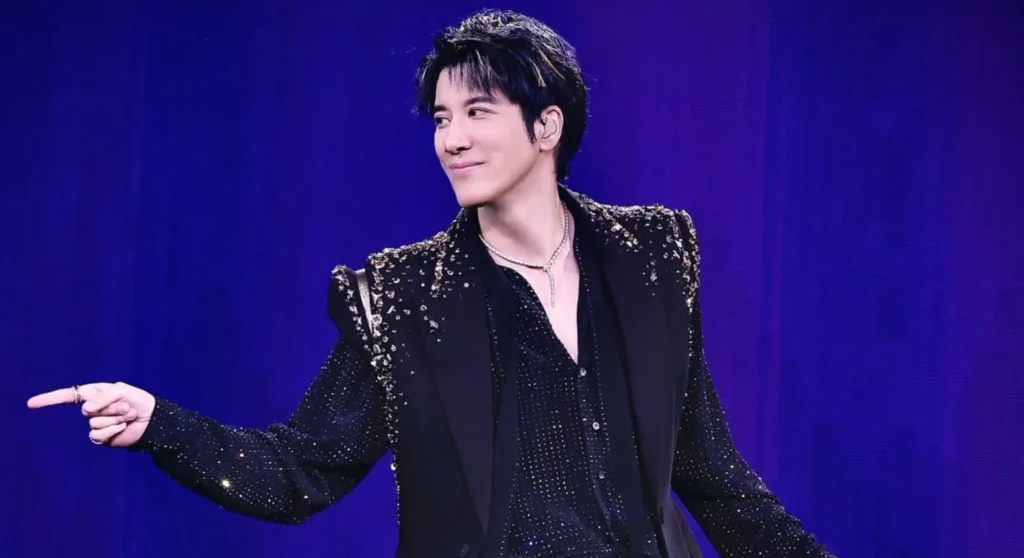
Leehom’s journey to becoming one of the most influential names in Chinese pop music is a story of talent, creativity, and constant reinvention. Known for combining traditional Chinese musical elements with modern pop, R&B, and hip-hop, Leehom has developed a sound that stands out in the Mandopop industry. His ability to sing, write, compose, produce, and perform has helped him build a lasting connection with audiences across generations.
Often celebrated as the King of Chinese Pop, Leehom has earned recognition not only for his hit songs but also for his musical versatility, instrumental skills, and contribution to the development of contemporary Chinese music. His career shows how an artist can respect musical traditions while continuing to explore new creative possibilities.
1. A Musical Journey That Began With Passion
Leehom’s musical journey began long before he became a familiar name in the Chinese-speaking world. Growing up in Rochester, New York, he developed an interest in music at an early age. He studied violin, learned piano, and later explored guitar and drums. His exposure to different instruments helped him develop a broad understanding of music.
Rather than limiting himself to one style, Leehom explored classical music, rock, pop, and R&B. This combination of influences would eventually become one of his greatest strengths as an artist.
He studied music and Asian studies at Williams College before continuing his musical education at Berklee College of Music. His education helped him develop both the technical knowledge and creative confidence to experiment with different sounds. Berklee College of Music+1
His professional career began in 1995, when he received a recording opportunity in Taiwan. His debut album, Love Rival, Beethoven, introduced him to the Mandopop industry. Although the album did not immediately make him a major star, it gave him the opportunity to understand the industry and develop his identity as a recording artist.
His early years were a period of learning and experimentation. Instead of relying only on his image as a singer, Leehom began showing audiences that he could also contribute as a songwriter, composer, and producer.
2. The Breakthrough That Changed His Career
Every successful artist has a defining moment, and for Leehom, the album Revolution became an important turning point.
Released in 1998, the album helped establish him as a major name in Mandarin pop. Its title track became a major hit, while his work behind the scenes attracted attention from the music industry.
Leehom received recognition at the Golden Melody Awards, winning Best Mandarin Male Singer and Best Producer. These achievements were particularly significant because they highlighted two sides of his talent: his ability to perform and his ability to create music.
His success as a producer helped distinguish him from artists who focused mainly on singing. He was increasingly recognized as someone who understood the creative process behind an album, from songwriting and arrangement to production.
The breakthrough also gave him greater freedom to explore his musical interests. With a growing audience and stronger industry recognition, he could begin developing a sound that reflected his own cultural background and artistic vision. AllMusic+1
3. Creating a Unique Sound Through East-Meets-West Music
One of the biggest reasons Leehom became such an influential figure in Chinese pop was his ability to bring different musical traditions together.
His music combines elements of Western pop, R&B, hip-hop, and electronic production with traditional Chinese instruments, melodies, and cultural influences. Instead of treating these styles as separate worlds, he found ways to make them work together.
This approach gave his music a distinctive identity. Listeners could hear contemporary international sounds while still recognizing elements of Chinese musical heritage.
Leehom’s interest in cultural fusion became especially clear through albums such as Shangri-La and Heroes of Earth. He explored traditional musical influences from different regions and brought them into modern arrangements.
For Shangri-La, he drew inspiration from musical traditions beyond mainstream pop, incorporating sounds associated with Southwestern China and other cultural influences. Heroes of Earth continued this exploration, bringing hip-hop together with elements of Chinese opera and traditional instrumentation.
These projects demonstrated that Chinese cultural influences could be part of modern pop production without losing their character. His experiments also encouraged conversations about how traditional music could reach younger audiences through contemporary arrangements. AllMusic+1
4. Bringing Traditional Chinese Instruments Into Modern Pop
Leehom’s ability to use traditional Chinese instruments is another important part of his musical identity.
Instruments such as the erhu, guzheng, and other traditional sounds have long been associated with Chinese musical heritage. Leehom explored ways to bring these sounds into contemporary pop arrangements, allowing them to exist alongside guitars, keyboards, drums, and modern production techniques.
One example is his song “Mistake in the Flower Fields,” which features the erhu in a contemporary musical setting. The combination gives the song a distinctive atmosphere while introducing traditional instrumental sounds to pop audiences.
His approach was not simply about adding traditional instruments for decoration. He used them as meaningful parts of the composition and arrangement.
This helped make his music interesting to listeners with different musical backgrounds. Fans who enjoyed modern pop could discover traditional Chinese sounds, while listeners familiar with traditional music could hear those elements presented in a new way.
By bringing these influences together, Leehom helped show that cultural heritage can remain relevant in an evolving music industry.
5. Becoming a Singer, Songwriter, and Producer
Leehom’s reputation was built on more than his voice. His involvement in songwriting, composition, arrangement, and production has been central to his career.
He has consistently taken an active role in shaping his albums. This creative involvement gives his music a personal quality because the final sound reflects his own ideas and musical decisions.
His understanding of different instruments also allows him to approach songs from several perspectives. He can think about a melody as a singer, an arrangement as a musician, and an entire album as a producer.
This versatility has helped him explore different genres without losing his artistic identity.
Across his career, he has moved between romantic ballads, energetic pop, R&B, hip-hop, rock, and experimental arrangements. Rather than remaining attached to one successful formula, he has continued to challenge himself creatively.
For many fans, this is one of the most impressive aspects of Leehom’s career. His music reflects the work of an artist who wants to participate in the creative process rather than simply perform what others have created.
6. Hit Songs That Connected With Millions of Fans
A major part of Leehom’s success comes from his ability to create songs that connect emotionally with listeners.
His discography includes romantic ballads, energetic pop tracks, experimental compositions, and songs inspired by cultural themes. Tracks such as “Forever Love,” “The One and Only,” “Kiss Goodbye,” and “Change Me” have become memorable parts of his musical journey.
These songs demonstrate his versatility as a performer. Some highlight his vocal ability and emotional delivery, while others showcase his interest in modern production and musical experimentation.
His romantic songs have connected with listeners through relatable emotions and memorable melodies. Meanwhile, his more experimental work has helped establish him as an artist willing to take creative risks.
This balance between familiar pop sounds and new musical ideas has played an important role in building his long-term popularity.
For many fans, Leehom’s music is connected to different stages of their lives. His songs have accompanied celebrations, relationships, personal memories, and important moments. That emotional connection is one reason his music continues to attract listeners.
7. Turning Concerts Into Unforgettable Experiences
Leehom’s influence extends beyond studio recordings. His live performances have become another important part of his identity as an entertainer.
His concerts combine powerful vocals, live instrumentation, choreography, visual effects, and carefully planned stage production. Rather than simply performing a collection of popular songs, he creates an experience that brings different parts of his musical career together.
His ability to perform across musical styles allows his concerts to move between emotional ballads and high-energy numbers. Fans can enjoy familiar classics while also experiencing new arrangements and different interpretations of his music.
Leehom’s large-scale tours have brought his performances to audiences across different cities and countries. His official website highlights the scale of his previous THE BEST PLACE tour, which featured 19 cities and 57 sold-out shows. King of Chinese Pop
His continued investment in live performances reflects his understanding that music is not only something people listen to. It is also something they experience together.
8. Expanding His Influence Beyond Music
Although music remains at the centre of his career, Leehom has also explored acting, filmmaking, and other creative opportunities.
He appeared in films such as Lust, Caution, directed by Ang Lee, and Little Big Soldier, alongside Jackie Chan. He also wrote, directed, and starred in Love in Disguise, demonstrating his interest in storytelling beyond music.
These experiences allowed him to reach audiences who may have first discovered him through cinema rather than his albums.
His achievements across different creative fields have contributed to his wider public profile. They also demonstrate his willingness to explore new challenges instead of limiting himself to a single profession. AllMusic+1
9. Why Leehom Earned the Title King of Chinese Pop
The title King of Chinese Pop reflects the influence Leehom has built through his music, performances, and creative contributions.
His career is significant because he has helped bring different musical worlds together. He has introduced modern pop audiences to traditional Chinese instruments and cultural influences while creating music that can appeal to listeners internationally.
His achievements as a singer, songwriter, composer, and producer have also helped establish his reputation as a complete musician. His work demonstrates that commercial success and creative experimentation can exist together.
Another important part of his legacy is his connection with fans. Over the years, his music has reached audiences across generations and different parts of the world. His concerts, recordings, and creative projects have helped maintain that relationship.
The recognition he has received from the music industry further reflects his contribution. His Golden Melody Awards and international recognition have established him as one of the notable artists in Mandopop history. asiasociety.org+1
Ultimately, Leehom’s journey is not defined by one album, one song, or one award. It is the result of decades of musical exploration, dedication, and an ongoing effort to create something distinctive.
10. The Legacy of Leehom in Chinese Pop Music
Leehom’s influence can be understood through the way he approaches music. He respects tradition but does not remain limited by it. He embraces modern production while continuing to explore the cultural sounds that inspire him.
His journey also offers an example for younger musicians who want to develop their own artistic identities. His career demonstrates the importance of learning, experimenting, understanding different musical traditions, and taking creative control.
As Chinese pop continues to evolve, the combination of cultural influences and contemporary sounds remains an important part of its development. Leehom’s work has helped demonstrate the possibilities of this approach.
From his early recordings in the 1990s to his major albums, international performances, and large-scale concert productions, he has built a career that reaches far beyond individual chart successes.
Leehom’s journey to becoming the King of Chinese Pop is ultimately a story of musical individuality. His ability to connect cultures, explore new sounds, and create music that resonates with millions has secured his place as one of the most recognizable names in Mandopop.