








In the three decades since Wang Leehom made his debut, Chinese pop music has been transformed — in no small part through his own efforts. He arrived as a classically trained musician who could have pursued a career in Western concert music, and instead chose to build something that had never existed: a pop style that was simultaneously at the cutting edge of Western R&B production and deeply, specifically rooted in Chinese cultural tradition.
That choice — to make music that required no compromise between Chinese identity and global musical ambition — was not just an artistic decision. It was a cultural argument, made through every album he released from the late 1990s onward. This guide examines the argument, its evidence, and its legacy in the current moment of Mandopop’s 2025–2026 evolution.
Table of Contents
Quick Answer:
Wang Leehom (王力宏, born May 17, 1976) is a Taiwanese-American singer-songwriter, multi-instrumentalist, producer, actor, and director who became one of the most commercially successful and musically influential Mandopop artists of the 2000s. He is best known for coining and popularising ‘chinked-out’ — a fusion of traditional Chinese music and Western R&B/hip-hop that directly anticipated the Zhongguo Feng movement of the 2020s. His peak albums include Wei Yi (2001), Heroes of Earth (2005), and Shangri-La (2004). In 2026, he is actively touring with The Best Place Tour, with sold-out shows drawing 20,000 fans per night.
Who Is Wang Leehom?
Wang Leehom (王力宏, born May 17, 1976, Rochester, New York) is a Taiwanese-American singer-songwriter, record producer, multi-instrumentalist, actor, and film director. He debuted in 1995 under Sony Music Taiwan and became one of the best-selling Mandarin-language artists in the world during the 2000s. He is best known for coining ‘chinked-out’ — a fusion of Chinese traditional music and Western R&B and hip-hop — and for albums including Wei Yi (2001), Heroes of Earth (2005), and Shangri-La (2004). In 2026, he continues to perform internationally with The Best Place Tour.
Wang Leehom’s background sets him apart from most of his Mandopop contemporaries. Born in the United States to Taiwanese parents, he was classically trained in violin and piano from childhood — eventually studying at Williams College (music) and the Berklee College of Music. His Western classical foundation gave him compositional and theoretical abilities that most commercially trained pop artists lack, and his Chinese heritage gave him a cultural investment in bringing those abilities to bear on Mandarin music in a way that felt authentic rather than imported.
Why Is Wang Leehom Called the King of Chinese Pop?
Wang Leehom is called the King of Chinese Pop for three specific reasons: First, he achieved extraordinary commercial success across Mandopop markets in the 2000s — his album Wei Yi (2001) became one of the best-selling Mandarin albums of its decade and his concerts sold out arenas across Asia. Second, he pioneered chinked-out, a fusion genre that expanded what Mandopop was allowed to be and directly influenced the Zhongguo Feng movement of the 2020s. Third, his musical credentials — classical training, 10+ instruments, self-produced albums — represent a standard of musicianship that has elevated expectations across the entire genre.
The ‘King’ designation is important to contextualise honestly in 2026. Wang Leehom held undisputed commercial and cultural dominance in Mandopop through much of the 2000s and early 2010s. His public profile in Mainland China changed significantly following personal controversies that became public in late 2021, and he maintains a lower promotional presence in that market than at his peak. His musical legacy and influence on the genre, however, remain fully intact — and his 2026 touring activity demonstrates a sustained relationship with a loyal international fanbase.
What Is Chinked-Out Music?
‘Chinked-out’ is a music genre term coined by Wang Leehom to describe his signature fusion style: the integration of traditional Chinese musical elements — folk instruments (erhu, guzheng, pipa, dizi), Beijing Opera vocal techniques, classical Chinese melodic structures and scales — with contemporary Western R&B, hip-hop, and pop production. The name was a deliberate act of cultural reclamation: taking a historically derogatory English slur and reframing it as a description of cultural pride and musical identity.
Wang Leehom began developing this approach in the late 1990s and fully articulated it on Heroes of Earth (盖世英雄, 2005) — the album most associated with chinked-out as a defined style. The title track opens with Beijing Opera vocals and drops into a hip-hop beat, arguing through its structure that these two traditions not only coexist but enhance each other. This was a compositional proposition that the mainstream Mandopop industry had not previously made.
The significance of chinked-out in 2025–2026 is that it is the direct philosophical and aesthetic ancestor of Zhongguo Feng (中国风, ‘Chinese style’) — the fastest-growing trend in contemporary C-pop. Artists and producers who are currently celebrated for their Chinese cultural fusion sound are building on a foundation that Wang Leehom constructed in the early 2000s. The difference: he gave it a name, coined it publicly, and argued for it as an artistic philosophy rather than simply practising it.
| Chinked-Out Element | Chinese Source | Western Framework | Result |
| Instrumental texture | Erhu (二胡), guzheng (古筝), pipa (琵琶), dizi (笛子) | R&B and hip-hop production — beats, bass lines, synthesizers | Music that sounds simultaneously ancient Chinese and cutting-edge global |
| Vocal tradition | Beijing Opera (京剧) ornamentation and power techniques | Contemporary pop vocal production and melodic conventions | Songs that can be performed in both concert hall and pop contexts |
| Lyrical approach | Classical Chinese poetry references, historical imagery, cultural pride | Hip-hop’s tradition of cultural identity assertion and self-expression | Lyrics that are simultaneously literary and personally direct |
| Compositional structure | Pentatonic scales, Chinese modal systems, folk melody frameworks | Western verse-chorus structure, harmonic progressions | Songs that feel Chinese in character but immediately accessible globally |
Wang Leehom’s Career Timeline: Era by Era
Debut Era 1995–1999
Sound: Mainstream Mandopop ballads and R&B — strong vocal delivery, Western musical training evident, Chinese cultural identity not yet fully defined
Defining Moment: Debut album ‘Love the Way You Are’ (你是我心内的一首歌, 1995) establishes his voice and establishes his crossover potential; early albums demonstrate classical precision applied to pop production
Legacy: Established his credibility as a serious musician in a genre that often prioritised image over craft; built initial fanbase in Taiwan and Southeast Asia
Chinked-Out Formation 2000–2004
Sound: R&B/Mandopop with increasing integration of Chinese traditional elements — the chinked-out philosophy begins to take shape
Defining Moment: Wei Yi (唯一, 2001) becomes his commercial breakthrough — one of the best-selling Mandarin singles of the decade; Heartbeat (心跳, 2000) establishes his R&B credentials; Shangri-La (2004) introduces Tibetan musical influences
Legacy: Proved that emotional depth and commercial accessibility were not incompatible; Wei Yi remains a streaming staple and cultural touchstone 25 years after release
Chinked-Out Peak 2005–2008
Sound: Full realisation of the chinked-out philosophy — hip-hop, Beijing Opera, Chinese traditional instruments, folk melodies synthesised into a coherent artistic statement
Defining Moment: Heroes of Earth (盖世英雄, 2005) is the album most associated with his artistic peak — the title track fuses Beijing Opera vocals with hip-hop beats; Change Me (改变自己, 2008) introduces ecological and social consciousness to Mandopop
Legacy: Heroes of Earth is now widely cited as a foundational text for the Zhongguo Feng movement; Change Me established that Mandopop could carry serious social messages without losing commercial appeal
Commercial Consolidation 2010–2015
Sound: Refined, more accessible versions of the chinked-out style; increased focus on ballads and direct emotional appeal; film career expands
Defining Moment: Love in Disguise (恋爱通告, 2010) — his directorial debut — demonstrates artistic ambition beyond music; continued arena touring across Asia
Legacy: Showed that the chinked-out aesthetic could sustain a decade-long career rather than being a one-album novelty; his influence on younger artists becomes documented during this period
Return & Tour Era 2022–2026
Sound: Active return to touring after period of reduced promotional activity; focus on international fanbase and anniversary milestones
Defining Moment: The Best Place Tour (2025–2026): sold-out shows at Foshan International Sports Culture Center (January 16–17, 2026 — 20,000 fans per night, both dates sold out) and Sanya Sports Center Gymnasium (February 6–8, 2026); Love Rival Beethoven 30th anniversary celebrated with fan events and special appearances
Legacy: Demonstrates that core fanbase loyalty has survived turbulent personal period; international streaming catalogue maintains consistent performance on global platforms
Wang Leehom’s Key Albums: A Discography Reference
| Album Title | Chinese Title | Year | Sound / Style | Significance |
| Wei Yi | 唯一 | 2001 | Acoustic ballad + R&B | His commercial breakthrough — the title track is one of the best-selling Mandarin singles of the 2000s; still among his most-streamed songs 25 years later |
| Heartbeat | 心跳 | 2000 | R&B / Mandopop | Established his R&B credentials; showed that Chinese pop could incorporate Black American music influences authentically |
| Shangri-La | 天各一方 | 2004 | Chinked-out development — Tibetan influences, R&B | Expanded chinked-out geography to include Tibetan music; Kiss Goodbye showed his English-language crossover ambitions |
| Heroes of Earth | 盖世英雄 | 2005 | Full chinked-out — Beijing Opera + hip-hop | His most artistically significant album; the title track is the defining chinked-out statement; now recognised as a precursor to Zhongguo Feng |
| Heart Beat | 心·跳 | 2008 | R&B / social consciousness | Change Me (改变自己) introduced ecological themes to mainstream Mandopop — ahead of its time by at least a decade |
| Love in Disguise | 恋爱通告 | 2010 | Film soundtrack / director debut | His film directing debut — demonstrates artistic range beyond music; showed Mandopop stars could build multi-medium careers |
What Instruments Does Wang Leehom Play?
Wang Leehom’s multi-instrumental ability is central to his musical identity and his chinked-out philosophy. His proficiency spans both Western classical and traditional Chinese instruments — a combination that is genuinely rare among pop musicians globally.
| Instrument | Training Level | Role in His Music |
| Violin | Classical — primary instrument from childhood; studied formally through adolescence | The foundation of his musical identity; classical violin training gave him the music theory, compositional, and ear-training foundations for everything else |
| Piano | Classical — formal training | Used in composition, ballad arrangements, and studio production; the harmonic intelligence behind his songwriting |
| Guitar (acoustic + electric) | Professional performance level | His primary live performance instrument for mid-tempo and R&B tracks; acoustic guitar features in ballad recordings |
| Erhu (二胡) | Proficient | Key chinked-out instrument — the erhu’s voice-like quality appears in Heroes of Earth and other traditional fusion pieces |
| Guzheng (古筝) | Proficient | Provides the ‘Chinese classical’ texture in his chinked-out arrangements |
| Trumpet | Trained | Jazz and brass influences appear in his more experimental work; gives certain arrangements a big-band flavour |
| Drums / Percussion | Competent | Understands rhythm deeply as a producer; his production decisions in percussion are more sophisticated than most pop-trained artists |
| Cello | Trained | Appears in studio arrangements; his classical training extends to understanding the full string family |
Wang Leehom’s Film Career
Wang Leehom’s film work demonstrates the artistic ambition that distinguishes him from artists who limit their creative identity to music. His screen career spans acting roles in major international productions and his own directorial work.
| Film | Year | His Role | Director | Significance |
| Lust, Caution (色,戒) | 2007 | Acting role — Kuang Yumin, a university student and underground activist | Ang Lee | Ang Lee’s internationally acclaimed film; Wang Leehom’s performance in a role requiring dramatic vulnerability in a serious historical thriller demonstrated his credibility as a dramatic actor |
| Love in Disguise (恋爱通告) | 2010 | Lead actor AND director | Wang Leehom (directorial debut) | His directorial debut — he wrote, directed, starred in, and composed the music for this romantic comedy; demonstrated the full extent of his multi-medium creative ambitions |
| Forever Young (无问西东) | 2018 | Lead acting role | Miao Xiaotian | A prestige historical drama spanning multiple time periods; his performance was praised for its restraint and emotional complexity |
For first-time viewers of Wang Leehom’s film work: start with Lust, Caution to see his dramatic range in an internationally acclaimed context, then watch Love in Disguise to see his directorial and compositional skills applied to a single project simultaneously.
How Did Wang Leehom Influence Mandopop?
Wang Leehom’s primary influence on Mandopop was proving — through commercial success, not just artistic argument — that Chinese traditional music and contemporary global pop production were not in conflict. His chinked-out albums in the 2000s demonstrated that an artist could simultaneously be a top-selling pop star in the Mandarin-speaking world and a genuine innovator in Chinese cultural music — and that these two identities reinforced rather than compromised each other.
Specific Innovations He Introduced
- Beijing Opera integration into commercial pop: Heroes of Earth (2005) was the first major commercial Mandopop album to use Beijing Opera vocal techniques in a hip-hop framework — an integration that would become standard in Zhongguo Feng productions two decades later.
- Traditional instrument normalisation in pop: By featuring erhu, guzheng, and pipa in arrangements that sat alongside R&B beats rather than in ‘traditional music’ section, he established that these instruments belonged in contemporary pop — not just in classical or ethnic music contexts.
- Chinese-American crossover as identity rather than compromise: His dual US/Taiwanese background could have been positioned as a limitation. He positioned it as his greatest strength — proof that Chinese cultural identity and global musical ambitions were the same thing, not competing demands.
- Multi-instrument credibility raising: His ability to write, produce, arrange, and play most of the instruments on his albums raised expectations for what a Mandopop artist could be. Many subsequent artists who perform as singer-songwriter-producers cite his model.
- Social and environmental messaging: Change Me (2008) demonstrated that Mandopop could carry serious social content without losing commercial appeal — a permission that subsequent artists have used to explore LGBT rights, mental health, and political identity in their work.
Artists Who Cite His Influence
Wang Leehom’s influence on subsequent generations of Chinese musicians is well-documented through direct citation in interviews and demonstrable stylistic adoption:
- Young Mandopop artists who incorporate traditional Chinese instruments in hip-hop and R&B frameworks are using the template he established with chinked-out in the 2000s
- The entire Zhongguo Feng genre movement — associated in the 2020s with artists like Hua Chenyu and the C-drama soundtrack ecosystem — builds directly on the philosophy he articulated
- Chinese-American crossover artists who navigate dual cultural identities in their work have his career model as the most successful precedent in Mandopop history
Wang Leehom vs Jay Chou: How Are They Different?
Wang Leehom and Jay Chou are the two artists most associated with Mandopop’s creative golden age in the 2000s. They are often compared, and understanding the differences between them clarifies both artists’ significance.
| Dimension | Wang Leehom (王力宏) | Jay Chou (周杰倫) |
| Musical Training | Formal classical — violin and piano through conservatory-level study; Berklee College of Music | Self-taught pianist with extraordinary natural ability; instinctive rather than formal compositional approach |
| Signature Concept | Chinked-out: explicit cultural identity argument made through genre fusion — named and theorised publicly | Zhongguo Feng: Chinese cultural music embedded in pop/hip-hop production — implicit rather than explicitly theorised |
| Production Approach | Deeply involved in production, arrangement, and instrumentation of own albums; hands-on studio artist | Produces his own material with equal involvement; perhaps more instinctively compositional, Wang Leehom more architecturally planned |
| Commercial Peak | 2000–2012 — major arena presence across all Mandopop markets; particularly strong in Mainland China in mid-2000s | 2000–present — consistent commercial dominance; the best-selling Mandarin artist of the 21st century; still charting in 2026 |
| Film Career | Actor (Lust, Caution) and director (Love in Disguise) — substantial film work independent of music career | Actor in several films; film work secondary to music identity |
| Cultural Statement | Explicit — chinked-out as public cultural argument and named genre identity | Implicit — the music makes the argument; Jay Chou rarely articulates a cultural theory |
| Legacy Assessment | Pioneer whose ideas are now mainstream; his cultural thesis has been proven correct by history; touring in 2026 | The most commercially successful Mandopop artist of all time; his dominance is ongoing; monthly Spotify listeners consistently 35M+ |
Wang Leehom in 2025–2026
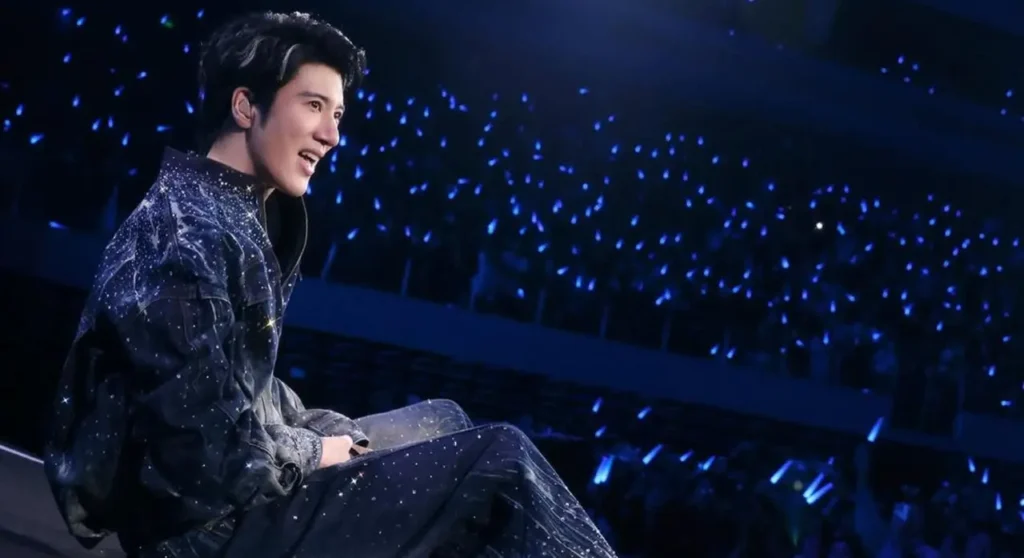
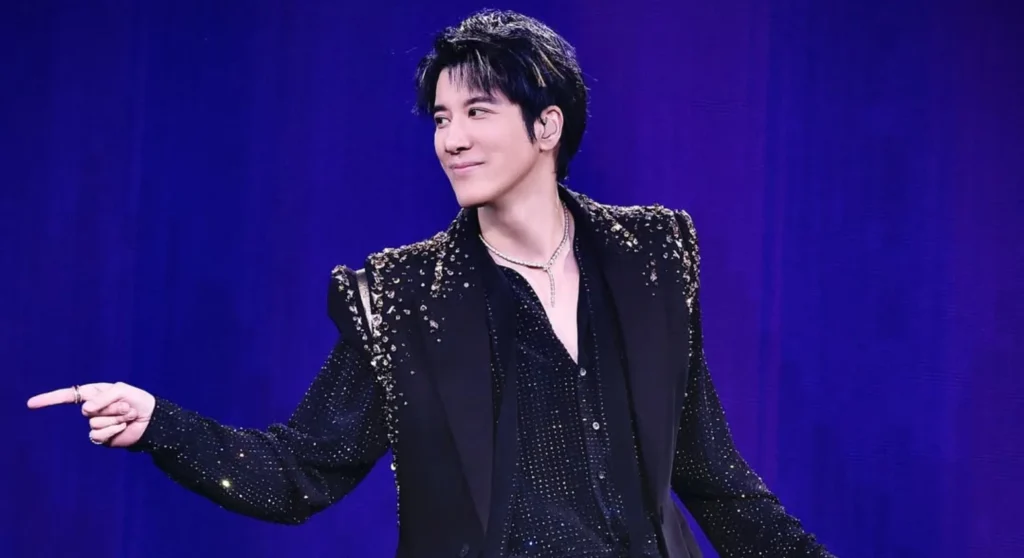
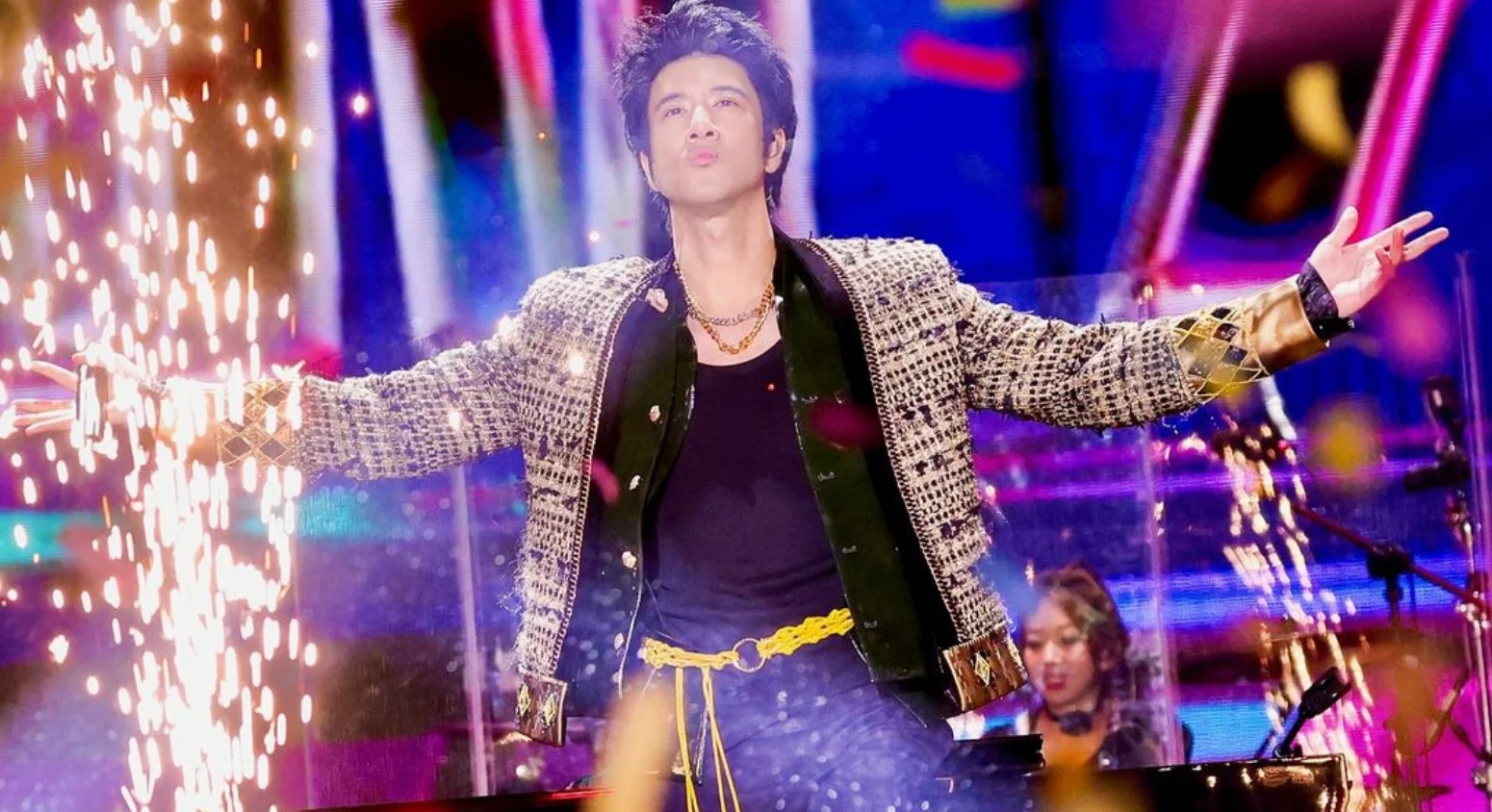
Wang Leehom returned to active touring in 2025–2026 with The Best Place Tour — demonstrating that the fanbase built over three decades of musical achievement has remained loyal through a difficult personal period. The sold-out Foshan shows in January 2026 drew 20,000 fans per night across two consecutive dates. His international streaming catalogue continues to perform on global platforms, particularly the 2000s-era albums that have been rediscovered by younger listeners through C-drama and Zhongguo Feng content.
Love Rival Beethoven: 30th Anniversary (2025–2026)
Wang Leehom’s Love Rival Beethoven (情敌贝多芬) is celebrating its 30th anniversary in 2025–2026. He has marked the milestone with fan events and special appearances — including his playful costumed Beethoven appearance documented across social media in December 2025. The anniversary has generated renewed interest in his early discography among both long-time fans and younger listeners encountering his catalogue for the first time.
Musical Legacy in the Zhongguo Feng Era
The most significant long-term development for Wang Leehom’s legacy in 2025–2026 is the mainstream success of Zhongguo Feng — the Chinese cultural music movement that his chinked-out work in the 2000s preceded by approximately two decades. As the movement grows in visibility through C-drama soundtracks, Bilibili content creators, and mainstream C-pop productions, critical music listeners and industry observers are increasingly tracing its intellectual lineage back to his work. This retrospective recognition is the strongest form of legacy — not just being remembered, but being proven right by history.
Conclusion: The Case for Wang Leehom’s Musical Legacy
Wang Leehom’s position in Mandopop history rests on something more durable than chart success or celebrity: a cultural argument made through music. His chinked-out thesis — that Chinese traditional music and global pop production belonged together, that Chinese cultural identity and international musical ambition were not opposing forces — was made with such musical conviction and commercial success that it eventually became the mainstream assumption of an entire genre.
The argument this article makes for his legacy is not that he is the most commercially successful Mandopop artist of all time — Jay Chou holds that position by any measurable standard. The argument is that Wang Leehom made a specific cultural contribution that changed what Mandopop was allowed to be, and that this contribution’s significance is more visible in 2025–2026, with Zhongguo Feng at its cultural peak, than it was when he first made it in 2005.
In 2026, with The Best Place Tour drawing sold-out crowds and his 30th anniversary catalogue generating renewed interest, Wang Leehom continues to demonstrate the proposition his music has always made: that great music made with genuine cultural conviction has a durability that outlasts any particular cultural moment.
Frequently Asked Questions
Why is Wang Leehom called the King of Chinese Pop?
Wang Leehom earned the ‘King of Chinese Pop’ title through three contributions: extraordinary commercial success in the 2000s Mandopop market (Wei Yi was one of the best-selling Mandarin albums of its decade), the invention and popularisation of ‘chinked-out’ — a fusion genre that redefined what Mandopop could be — and a standard of musicianship (classical training, 10+ instruments, self-production) that elevated expectations across the entire genre.
What is chinked-out music?
Chinked-out is a music style coined by Wang Leehom that fuses traditional Chinese musical elements — folk instruments (erhu, guzheng, pipa), Beijing Opera vocal techniques, classical Chinese melodic structures — with contemporary Western R&B and hip-hop production. The term was a deliberate cultural reclamation. He introduced this style in the late 1990s and fully realised it on Heroes of Earth (2005). Chinked-out directly anticipated the Zhongguo Feng movement of the 2020s.
What are Wang Leehom’s most famous songs?
Wang Leehom’s most celebrated songs include Wei Yi (唯一, 2001) — one of the best-selling Mandarin singles of the 2000s; Forever Love (永远的第一天, 1999) — a wedding anthem still streamed widely; Heroes of Earth (盖世英雄, 2005) — his most artistically significant track, fusing Beijing Opera with hip-hop; and Change Me (改变自己, 2008) — his socially conscious statement on personal and environmental responsibility.
What is Wang Leehom doing in 2026?
In 2026, Wang Leehom is actively touring with The Best Place Tour. He performed sold-out shows at Foshan International Sports Culture Center in January 2026 (20,000 capacity, both January 16–17 dates sold out) and continued with Sanya shows in February 2026. He is also marking the 30th anniversary of his Love Rival Beethoven album with fan events and special appearances. His streaming catalogue continues to perform internationally.
What happened to Wang Leehom?
Wang Leehom’s highly publicised divorce from Lee Jinglei became public in December 2021, with both parties making extensive allegations on social media. The controversy significantly affected his public profile in Mainland China. He maintained a lower promotional presence in that market from 2022 onward while continuing to perform for international audiences. In 2025–2026, he returned to active touring with The Best Place Tour, drawing sold-out crowds in Foshan and Sanya.
How did Wang Leehom influence Mandopop?
Wang Leehom’s primary influence on Mandopop was demonstrating commercially that Chinese traditional music and Western pop production belonged together. His chinked-out albums in the 2000s normalised erhu, guzheng, and Beijing Opera in hip-hop frameworks — a synthesis that is now the foundation of Zhongguo Feng, the defining C-pop trend of the 2020s. He also raised the standard for musician credibility in the genre through his classical training and self-produced albums.
How is Wang Leehom different from Jay Chou?
Both are 2000s Mandopop innovators who pioneered Chinese cultural music fusion, but they differ significantly. Wang Leehom (chinked-out) explicitly named and theorised his fusion approach as a cultural argument; Jay Chou (Zhongguo Feng) made the same argument implicitly through the music itself. Wang Leehom is formally trained (Williams College, Berklee); Jay Chou is self-taught. Jay Chou has been more commercially dominant and continues to chart globally; Wang Leehom was more artistically radical at his peak.
What instruments does Wang Leehom play?
Wang Leehom plays over 10 instruments across both Western and Chinese traditions. His primary instruments are violin (classical training from childhood) and piano (formally trained). He also plays guitar (acoustic and electric), erhu (二胡), guzheng (古筝), trumpet, cello, and drums. His multi-instrumental ability — spanning Chinese and Western traditions — is the practical foundation of his chinked-out fusion philosophy.